christova  

Tech Articles


Collated from various sources. Full copyright remains with original authors.

#microservices #bestpractices

1️⃣ Single Responsibility: Imagine a tiny, focused superhero instead of a jack-of-all-trades. That's the essence of single responsibility. Each microservice should do one thing and do it well. This makes them easier to understand, develop, test, and maintain.

2️⃣ Separate Data Stores: Think of each microservice as a vault guarding its own treasure (data). Ideally, they should have dedicated data stores, like separate databases or NoSQL solutions. This isolates them from data issues in other services.

3️⃣ Asynchronous Communication: (but not hand-in-hand) Let your microservices chat through email instead of holding hands across the network. Use asynchronous communication like message queues or pub-sub systems. This decouples services and makes the system more resilient.

4️⃣ Containerization: Docker to the rescue! Containerization packages your microservices into neat, portable containers, ensuring consistent environments and simplifying deployment and scaling.

5️⃣ Orchestration: ️ Think of Kubernetes as the maestro of your container orchestra. It handles load balancing, scaling, and monitoring, making container management a breeze.

6️⃣ Build & Deploy Separation: ️ Imagine building a ship in a shipyard and then launching it from a separate port. That's the idea behind build and deploy separation. Keep these processes distinct to ensure smooth deployment across different environments.

7️⃣ Domain-Driven Design (DDD): DDD helps you navigate the domain of your microservices. It defines clear boundaries and interactions between services, ensuring they align with your business capabilities.

8️⃣ Stateless is the Goal: ‍♀️ Think of microservices as Zen masters – unburdened by state. Store any necessary state in external data stores for easier scaling and maintenance.

9️⃣ Micro Frontends for Web Apps: For web applications, consider the micro frontends approach. Break down the UI into independent components, allowing different teams to develop and deploy them faster.

#devops

Here's a quick dive into some fundamental pillars:

1 Continuous Integration (CI): Automate code integration to catch issues early. CI ensures that your codebase is always in a deployable state, promoting collaboration among developers.

2 Continuous Delivery (CD): Extend CI into the delivery phase, automating the release process. Achieve reliable, rapid, and low-risk releases, enabling your team to respond swiftly to market demands.

3 Configuration Management: Efficiently manage and automate infrastructure configurations. Tools like Ansible or Puppet ensure consistency, making it easier to scale and maintain infrastructure.

4 Infrastructure as Code (IaC): Code your infrastructure to enhance reproducibility and scalability. IaC, with tools like Terraform or CloudFormation, streamlines provisioning and management, reducing manual errors.

5 Health Monitoring & Automated Checks: Proactively monitor system health with automated checks. Utilise tools like Prometheus or Nagios to detect issues early, ensuring optimal performance and reliability.

6 CI/CD Pipelines: Create end-to-end automation pipelines. From code commit to deployment, CI/CD pipelines enhance efficiency, reduce manual intervention, and deliver value faster.

DevOps isn't just a set of practices; it's a cultural shift that fosters collaboration, automation, and continuous improvement. Implementing these components lays the foundation for seamless, reliable software delivery.

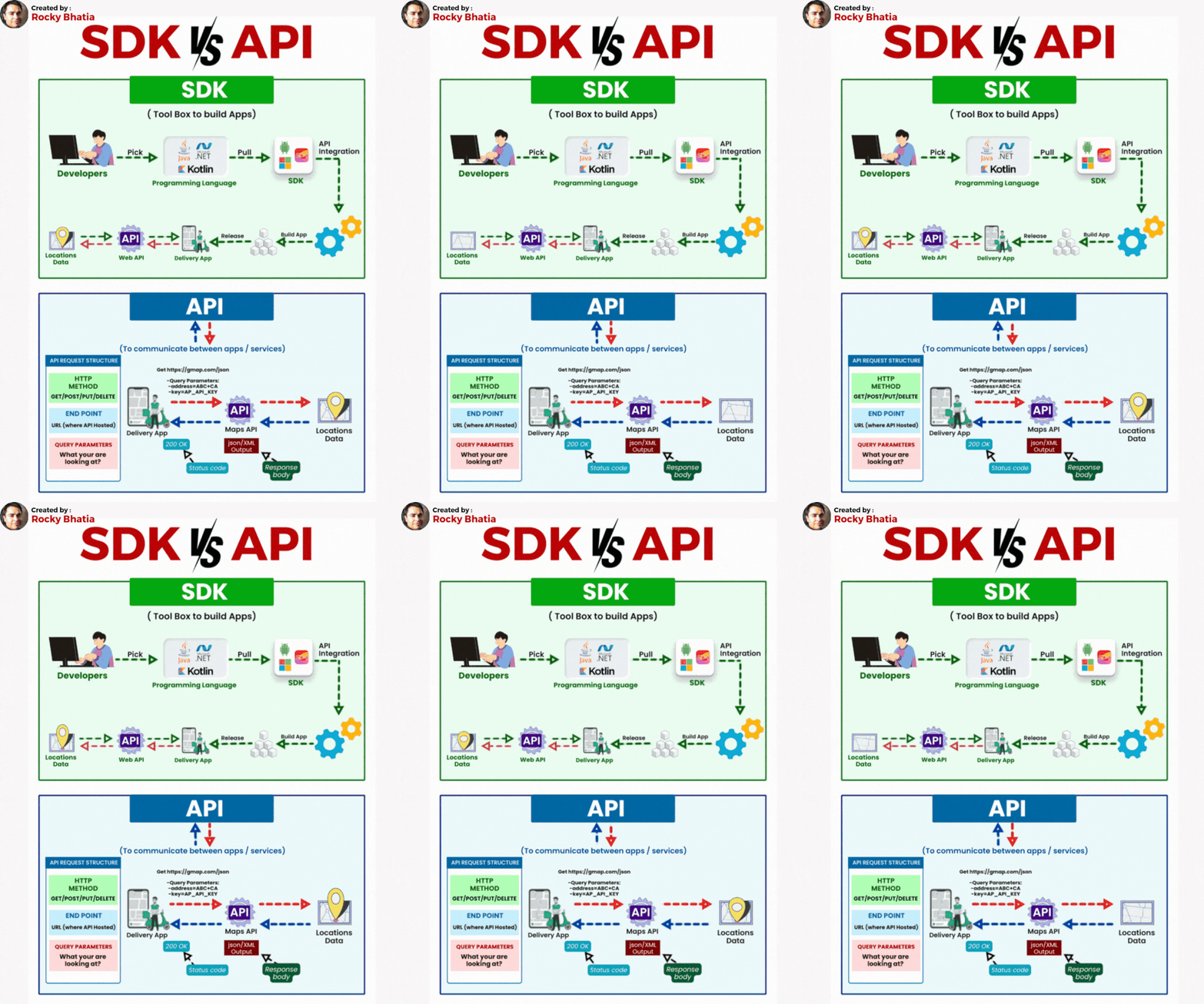
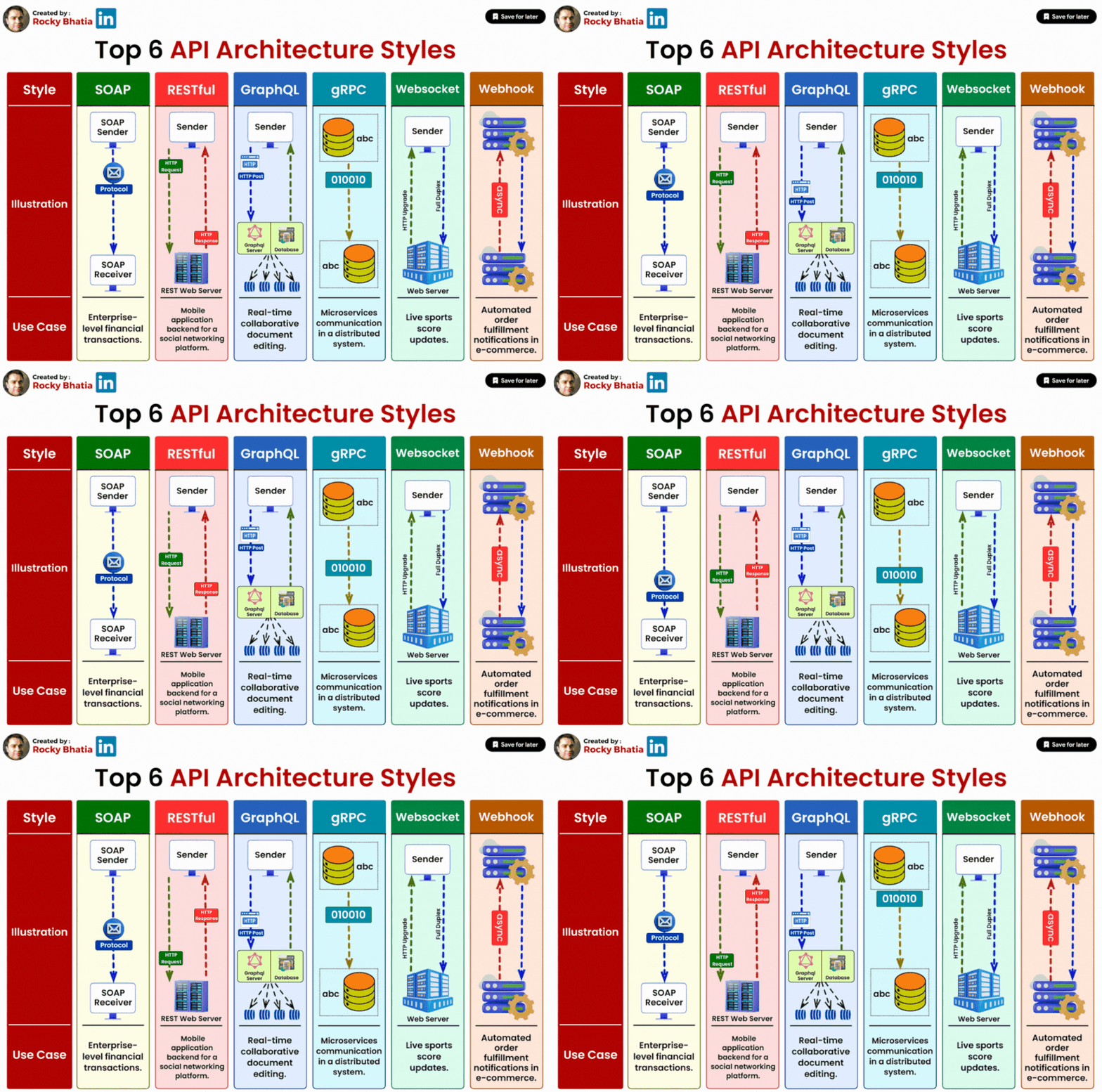
#apiprotocols #api #protocols #rest #graphql #soap

GraphQL: Request exactly what you need, boosting efficiency.

Web hooks: Instant updates via HTTP callbacks for realtime sync.

REST: Simple, scalable, and stateless, popular for web services.

SSE (ServerSent Events): Perfect for realtime updates and dynamic content.

EDI: Standardised document exchanges for streamlined transactions.

EDA: Event based communication, promoting scalability.

WebSockets: Two-way realtime communication for apps like chat.

SOAP: Reliable, secure communication with structured rules.

gRPC: High performance, fast service to service communication.

MQTT: Lightweight, ideal for IoT devices with low latency needs.

AMQP: Versatile, robust for scalable messaging systems.

#systemdesign #webapplication #template

𝐌𝐚𝐬𝐭𝐞𝐫 𝐭𝐞𝐦𝐩𝐥𝐚𝐭𝐞 𝐟𝐨𝐫 𝐛𝐮𝐢𝐥𝐝𝐢𝐧𝐠 𝐚𝐧𝐲 𝐰𝐞𝐛 𝐚𝐩𝐩𝐥𝐢𝐜𝐚𝐭𝐢𝐨𝐧 𝐚𝐫𝐜𝐡𝐢𝐭𝐞𝐜𝐭𝐮𝐫𝐞

1. Customers: End users who interact with the web application.

2. DNS (Domain Name System): Translates domain names into IP addresses.

3. Load Balancer: Distributes traffic across multiple servers for improved performance and availability.

4. Cache: Stores frequently accessed data for faster retrieval and reduced backend load.

5. Front-end: The user interface responsible for rendering, user input handling, and backend communication.

6. Message Queue: Manages asynchronous communication and tasks between front-end and back-end.

7. Back-end (Web Services): Contains business logic and handles user requests and data interactions.

8. Data Store: Stores and retrieves application data, including databases or other data storage systems.

9. Search Engine: Performs complex searches on large data sets efficiently (e.g., Elasticsearch).

10. CDN (Content Delivery Network): Distributes static assets for faster page loading and improved user experience.

11. Queue Workers: Process tasks from message queues, offloading resource-intensive operations.

These components work together to create a web application architecture that delivers a responsive and seamless user experience. The choice and configuration of these components depend on the specific requirements and goals of the application.

#microservices #bestpractices

https://www.linkedin.com/posts/rocky-bhatia-a4801010_microservices-best-practices-microservices-activity-7412455066206539776-V2Xk/

MicroServices Best Practices

Microservices are all the rage in the software world, and for good reason. This architecture breaks down complex applications into smaller, independent services, leading to increased agility, scalability, and maintainability.

But how do you ensure your microservices are built like champions? Enter best practices. Here's a rundown of some key principles to keep in mind:

1️⃣ Single Responsibility: Imagine a tiny, focused superhero instead of a jack-of-all-trades. That's the essence of single responsibility. Each microservice should do one thing and do it well. This makes them easier to understand, develop, test, and maintain.

2️⃣ Separate Data Stores: Think of each microservice as a vault guarding its own treasure (data). Ideally, they should have dedicated data stores, like separate databases or NoSQL solutions. This isolates them from data issues in other services.

3️⃣ Asynchronous Communication: (but not hand-in-hand) Let your microservices chat through email instead of holding hands across the network. Use asynchronous communication like message queues or pub-sub systems. This decouples services and makes the system more resilient.

4️⃣ Containerization: Docker to the rescue! Containerization packages your microservices into neat, portable containers, ensuring consistent environments and simplifying deployment and scaling.

5️⃣ Orchestration: ️ Think of Kubernetes as the maestro of your container orchestra. It handles load balancing, scaling, and monitoring, making container management a breeze.

6️⃣ Build & Deploy Separation: ️ Imagine building a ship in a shipyard and then launching it from a separate port. That's the idea behind build and deploy separation. Keep these processes distinct to ensure smooth deployment across different environments.

7️⃣ Domain-Driven Design (DDD): DDD helps you navigate the domain of your microservices. It defines clear boundaries and interactions between services, ensuring they align with your business capabilities.

8️⃣ Stateless is the Goal: ‍♀️ Think of microservices as Zen masters – unburdened by state. Store any necessary state in external data stores for easier scaling and maintenance.

9️⃣ Micro Frontends for Web Apps: For web applications, consider the micro frontends approach. Break down the UI into independent components, allowing different teams to develop and deploy them faster.

Bonus Best Practices: Monitoring & Observability: Keep a watchful eye on your microservices' health. Security: Shield your microservices from the bad guys. Automated Testing: Let robots do the repetitive stuff. Versioning: Keep track of changes and rollbacks easy. Documentation: Clearly document your microservices for future you. Remember: the best practices you choose depend on your project's needs. Customize your approach for a winning microservices architecture!

#loadbalancer #reverseproxy #apigateway #forwardproxy

Load Balancers, Reverse Proxies, Forward Proxies, and API Gateways: Know the Difference

Understanding these network components is crucial for building scalable and secure applications.

𝗟𝗼𝗮𝗱 𝗕𝗮𝗹𝗮𝗻𝗰𝗲𝗿𝘀 distribute traffic across multiple servers for optimal performance and reliability.

𝗥𝗲𝘃𝗲𝗿𝘀𝗲 𝗣𝗿𝗼𝘅𝗶𝗲𝘀 sit in front of web servers, enhancing security, load balancing, and performance.

𝗙𝗼𝗿𝘄𝗮𝗿𝗱 𝗣𝗿𝗼𝘅𝗶𝗲𝘀 act as intermediaries for clients, offering anonymity, caching, and content filtering.

𝗔𝗣𝗜 𝗚𝗮𝘁𝗲𝘄𝗮𝘆𝘀 manage and secure API traffic, providing a single entry point for multiple APIs.

Each plays a distinct role in network architecture, contributing to application performance, security, and scalability.

Enter your email to subscribe to updates.