bestpractices
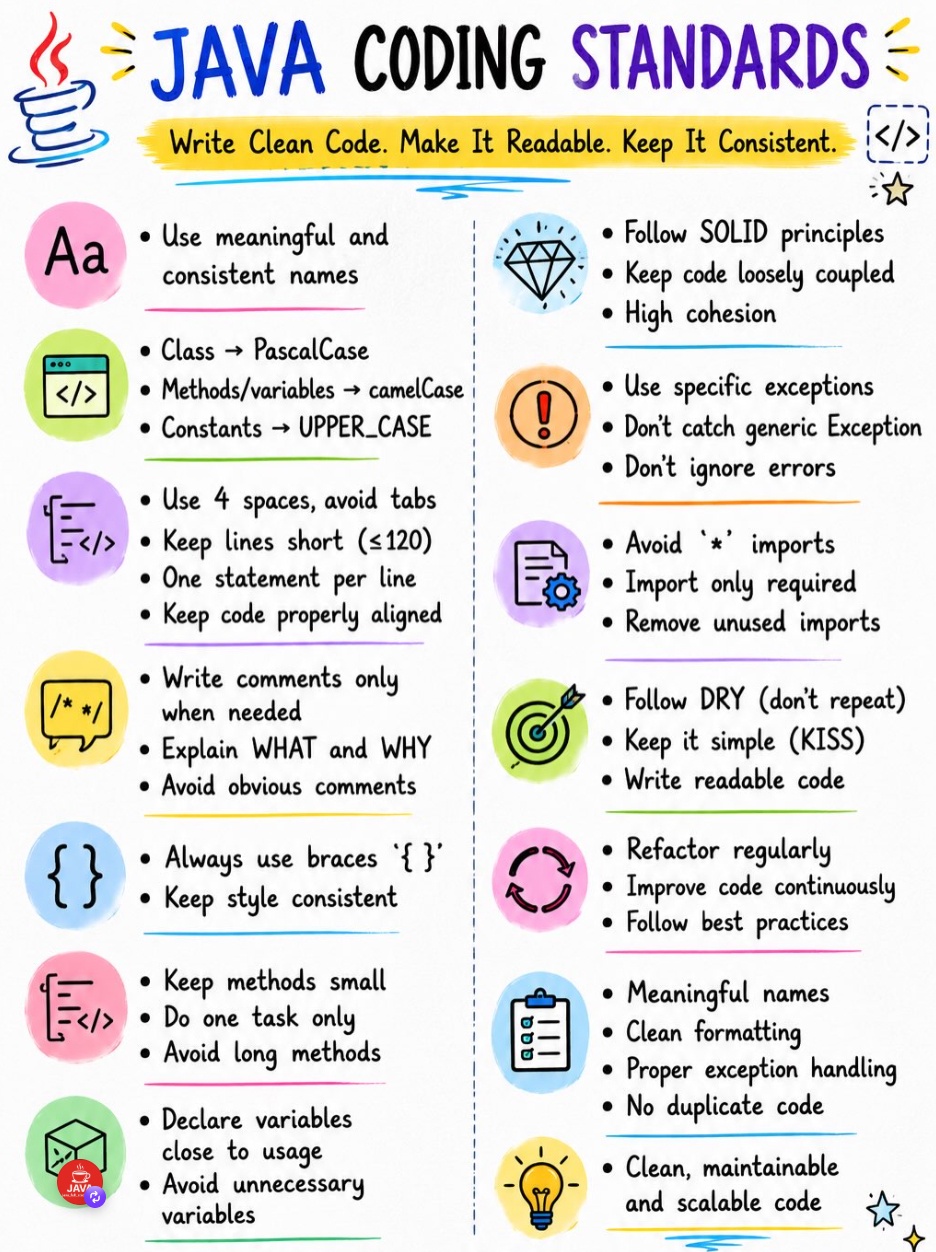
Java Best Practices
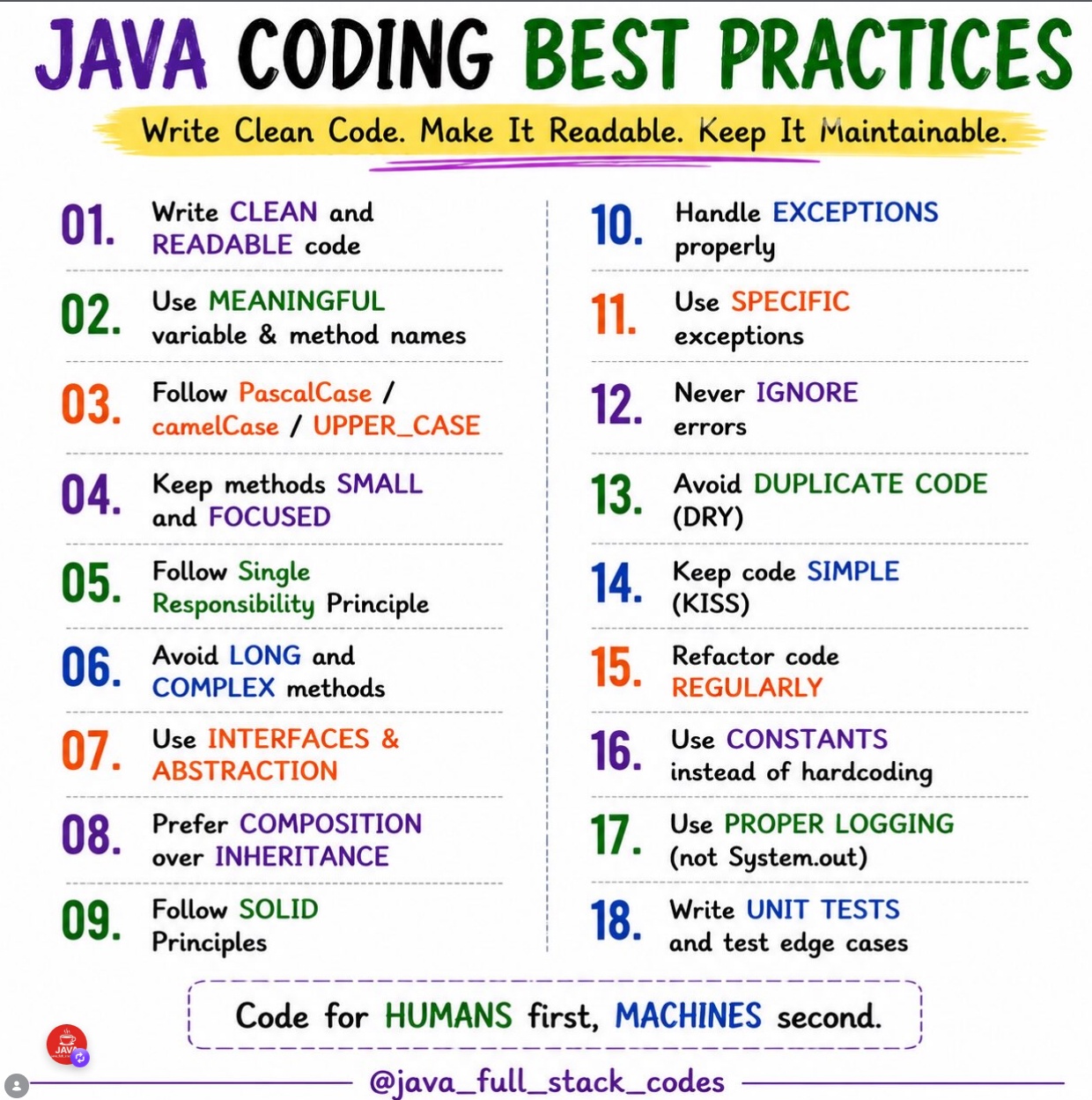
Microservices Best Practices
1️⃣ Single Responsibility: Imagine a tiny, focused superhero instead of a jack-of-all-trades. That's the essence of single responsibility. Each microservice should do one thing and do it well. This makes them easier to understand, develop, test, and maintain.
2️⃣ Separate Data Stores: Think of each microservice as a vault guarding its own treasure (data). Ideally, they should have dedicated data stores, like separate databases or NoSQL solutions. This isolates them from data issues in other services.
3️⃣ Asynchronous Communication: (but not hand-in-hand) Let your microservices chat through email instead of holding hands across the network. Use asynchronous communication like message queues or pub-sub systems. This decouples services and makes the system more resilient.
4️⃣ Containerization: Docker to the rescue! Containerization packages your microservices into neat, portable containers, ensuring consistent environments and simplifying deployment and scaling.
5️⃣ Orchestration: ️ Think of Kubernetes as the maestro of your container orchestra. It handles load balancing, scaling, and monitoring, making container management a breeze.
6️⃣ Build & Deploy Separation: ️ Imagine building a ship in a shipyard and then launching it from a separate port. That's the idea behind build and deploy separation. Keep these processes distinct to ensure smooth deployment across different environments.
7️⃣ Domain-Driven Design (DDD): DDD helps you navigate the domain of your microservices. It defines clear boundaries and interactions between services, ensuring they align with your business capabilities.
8️⃣ Stateless is the Goal: ♀️ Think of microservices as Zen masters – unburdened by state. Store any necessary state in external data stores for easier scaling and maintenance.
9️⃣ Micro Frontends for Web Apps: For web applications, consider the micro frontends approach. Break down the UI into independent components, allowing different teams to develop and deploy them faster.
Microservice Best Practices
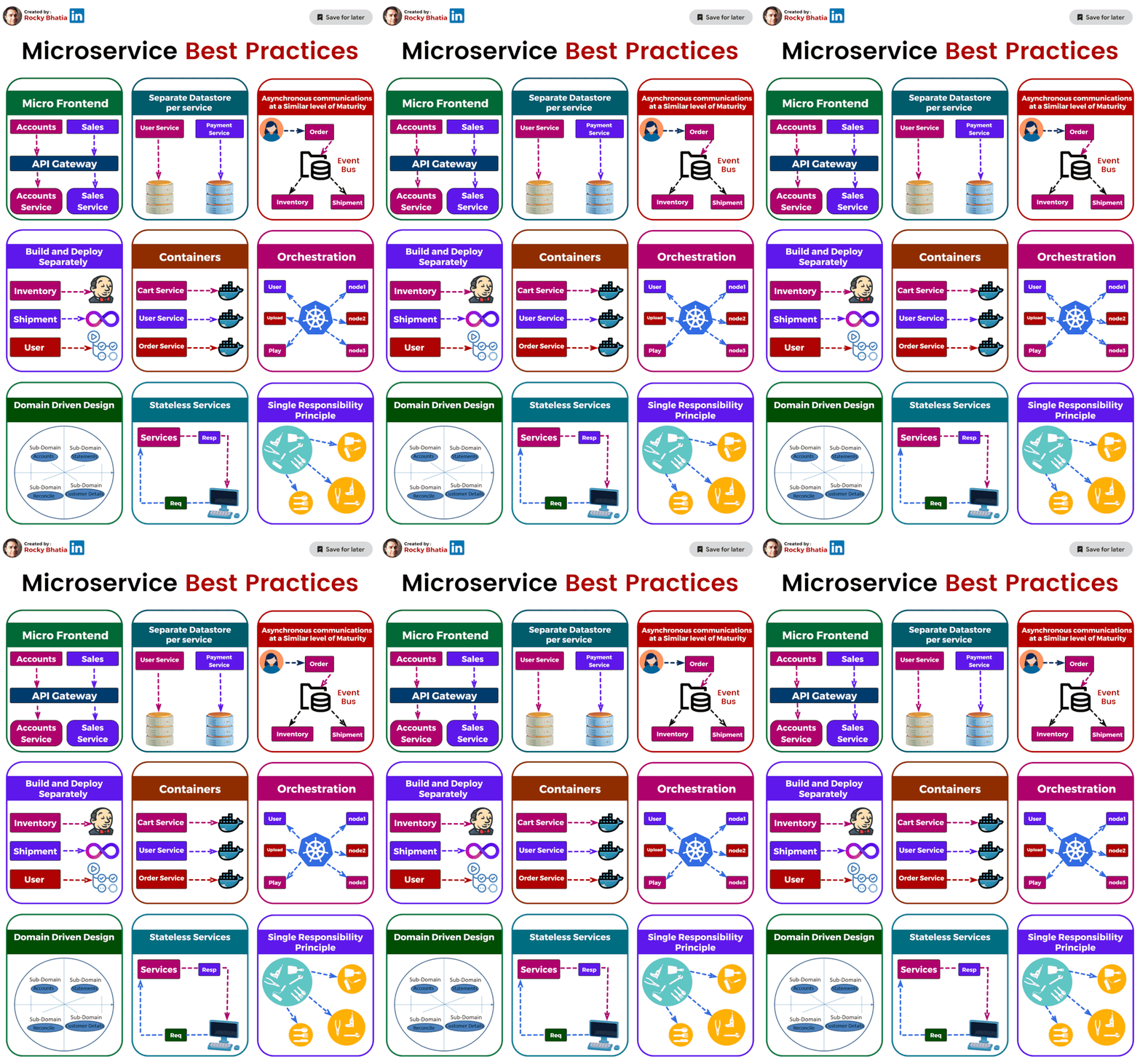
MicroServices Best Practices
Microservices are all the rage in the software world, and for good reason. This architecture breaks down complex applications into smaller, independent services, leading to increased agility, scalability, and maintainability.
But how do you ensure your microservices are built like champions? Enter best practices. Here's a rundown of some key principles to keep in mind:
1️⃣ Single Responsibility: Imagine a tiny, focused superhero instead of a jack-of-all-trades. That's the essence of single responsibility. Each microservice should do one thing and do it well. This makes them easier to understand, develop, test, and maintain.
2️⃣ Separate Data Stores: Think of each microservice as a vault guarding its own treasure (data). Ideally, they should have dedicated data stores, like separate databases or NoSQL solutions. This isolates them from data issues in other services.
3️⃣ Asynchronous Communication: (but not hand-in-hand) Let your microservices chat through email instead of holding hands across the network. Use asynchronous communication like message queues or pub-sub systems. This decouples services and makes the system more resilient.
4️⃣ Containerization: Docker to the rescue! Containerization packages your microservices into neat, portable containers, ensuring consistent environments and simplifying deployment and scaling.
5️⃣ Orchestration: ️ Think of Kubernetes as the maestro of your container orchestra. It handles load balancing, scaling, and monitoring, making container management a breeze.
6️⃣ Build & Deploy Separation: ️ Imagine building a ship in a shipyard and then launching it from a separate port. That's the idea behind build and deploy separation. Keep these processes distinct to ensure smooth deployment across different environments.
7️⃣ Domain-Driven Design (DDD): DDD helps you navigate the domain of your microservices. It defines clear boundaries and interactions between services, ensuring they align with your business capabilities.
8️⃣ Stateless is the Goal: ♀️ Think of microservices as Zen masters – unburdened by state. Store any necessary state in external data stores for easier scaling and maintenance.
9️⃣ Micro Frontends for Web Apps: For web applications, consider the micro frontends approach. Break down the UI into independent components, allowing different teams to develop and deploy them faster.
Bonus Best Practices: Monitoring & Observability: Keep a watchful eye on your microservices' health. Security: Shield your microservices from the bad guys. Automated Testing: Let robots do the repetitive stuff. Versioning: Keep track of changes and rollbacks easy. Documentation: Clearly document your microservices for future you. Remember: the best practices you choose depend on your project's needs. Customize your approach for a winning microservices architecture!