CICD
CI/CD
CI/CD Pipelines Made Simple 🚀
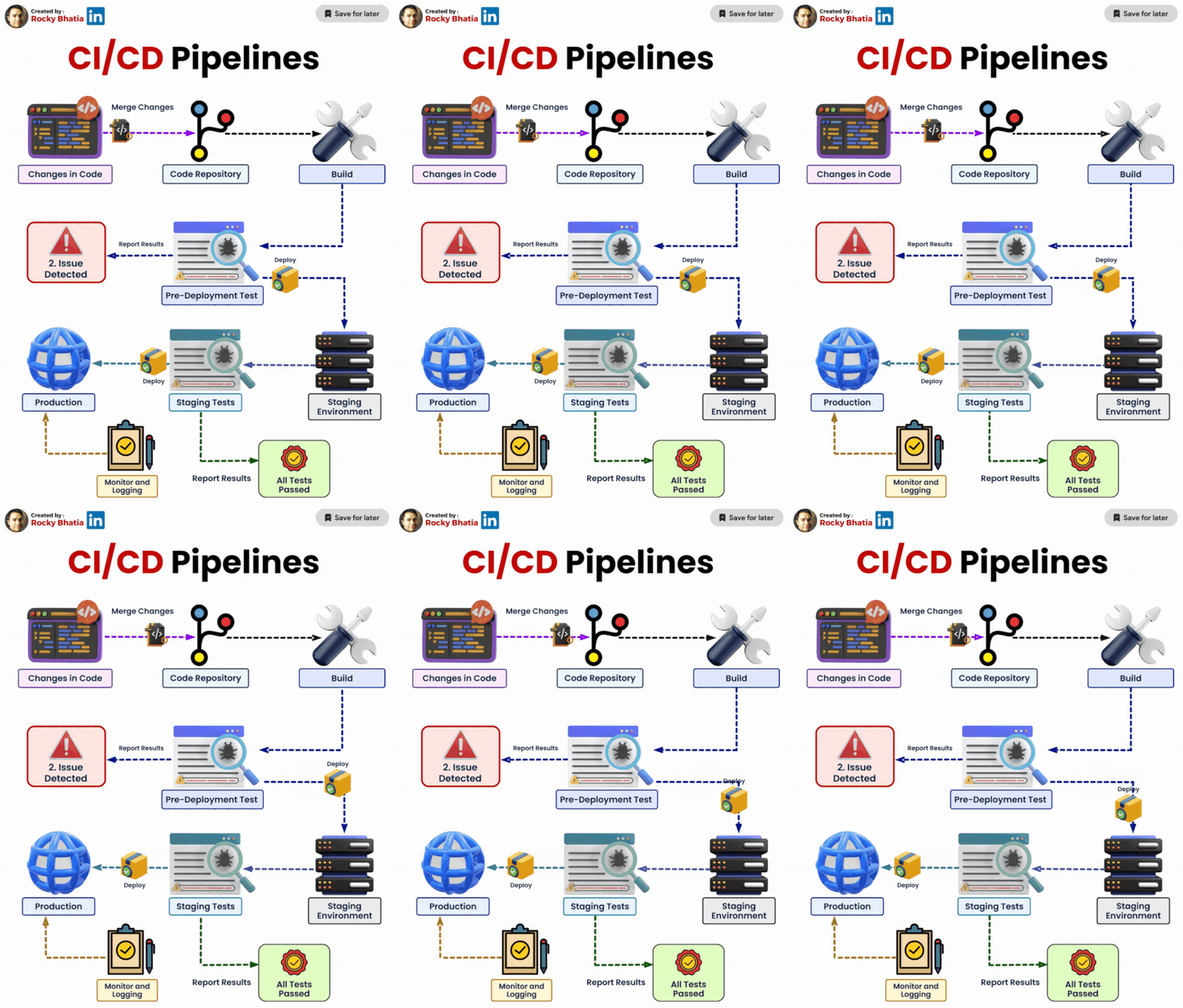
Ever wonder how modern apps deploy so seamlessly? Here’s how CI/CD pipelines work their magic:
- Code Changes: Developers push new features or bug fixes to the repository. - Automated Build: The pipeline compiles the code and packages it, preparing it for deployment. - Pre-Deployment Testing: Automated tests (unit, integration, and sometimes end-to-end) verify the code's stability and catch bugs early. - Staging Environment: The build is deployed in a staging environment that mirrors production for further testing. - Approval & Deployment: Once everything checks out, either automated rules or manual approval sends the build live to production. - Post-Deployment Monitoring: Tools monitor performance, logs, and user feedback to detect and address any issues quickly.
This streamlined process minimizes risks, speeds up delivery, and ensures users get the best experience. It’s automation at its finest!
What is DevSecOps?

What is DevSecOps?
DevSecOps emerged as a natural evolution of DevOps practices with a focus on integrating security into the software development and deployment process. The term “DevSecOps” represents the convergence of Development (Dev), Security (Sec), and Operations (Ops) practices, emphasizing the importance of security throughout the software development lifecycle. The diagram below shows the important concepts in DevSecOps.
1 . Automated Security Checks
2 . Continuous Monitoring
3 . CI/CD Automation
4 . Infrastructure as Code (IaC)
5 . Container Security
6 . Secret Management
7 . Threat Modeling
8. Quality Assurance (QA) Integration
9 . Collaboration and Communication
10 . Vulnerability Management