#java #microservices #front-end #back-end
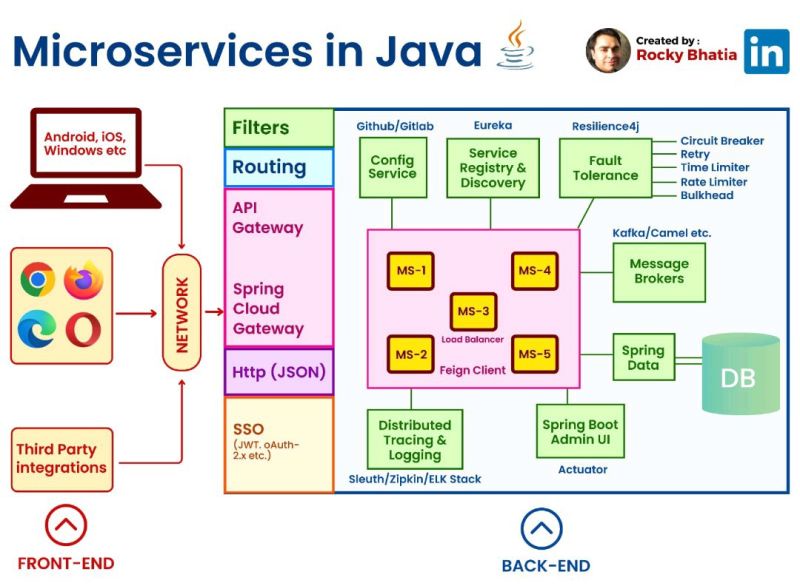
In a microservices architecture implemented using Java, the components typically include:
1. **Microservices**: These are the individual, small, and independent services that handle specific business functionalities. Each microservice is a standalone application that can be developed, deployed, and scaled independently.
2. **API Gateway**: The API Gateway acts as the entry point for external clients to access the microservices. It handles requests from clients, routes them to the appropriate microservices, and may perform tasks like authentication, rate limiting, and request/response transformations.
3. **Service Registry and Discovery**: To enable communication between microservices, a service registry and discovery mechanism is used. It keeps track of all running instances of microservices and allows other services to find and communicate with them without knowing their physical locations.
4. **Database per Service**: Each microservice typically has its own dedicated database, which ensures data isolation and autonomy for individual services. This approach avoids direct database coupling between services.
5. **Asynchronous Communication**: Microservices often use messaging systems like Apache Kafka or RabbitMQ for asynchronous communication between services. This allows services to exchange events and messages without immediate response requirements.
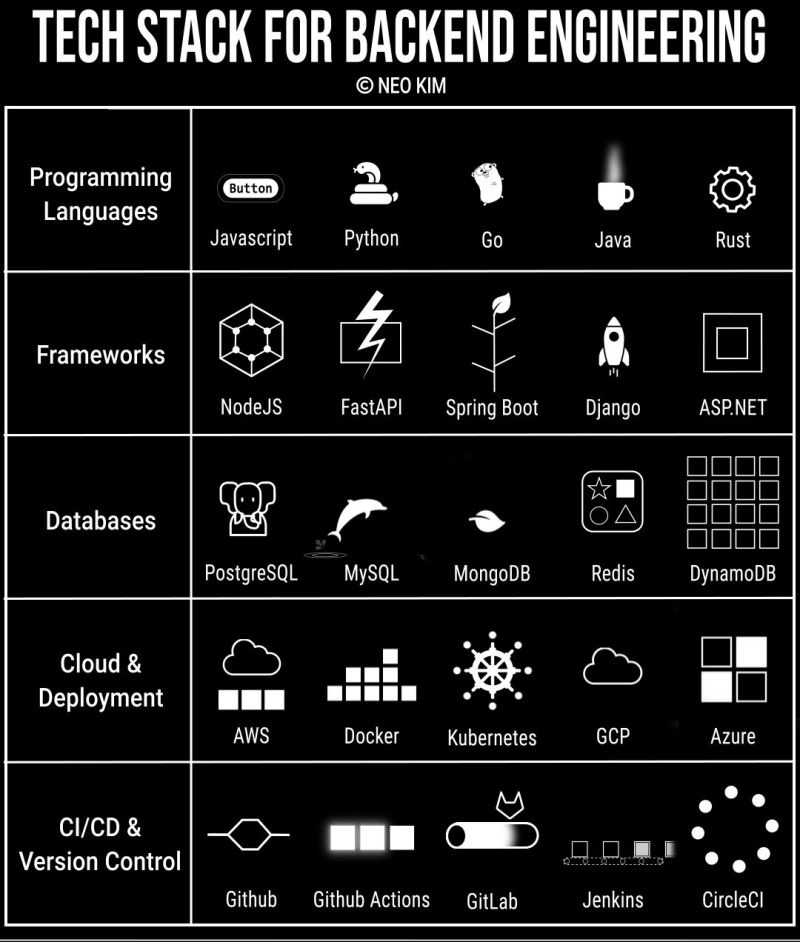
6. **Containerization**: Microservices are often deployed within containers (e.g., Docker) to ensure consistency across different environments and facilitate scalability.
7. **Continuous Integration and Deployment (CI/CD)**: Automation is crucial in a microservices environment. CI/CD pipelines are used to automate testing, building, and deploying microservices.
8. **Monitoring and Logging**: Monitoring tools are essential to keep track of the health and performance of microservices. Proper logging mechanisms are also crucial for debugging and troubleshooting.
9. **Load Balancing**: As microservices can be deployed across multiple instances, load balancers help distribute incoming traffic across these instances, ensuring even distribution and high availability.
10. **Security**: Security measures like access control, authentication, and authorization are crucial in a microservices environment to protect sensitive data and ensure secure communication between services.
These components work together to create a scalable, maintainable, and resilient microservices architecture in Java. However, the specific implementation of each component may vary based on the framework and tools chosen for the project.