messagequeues
Kafka
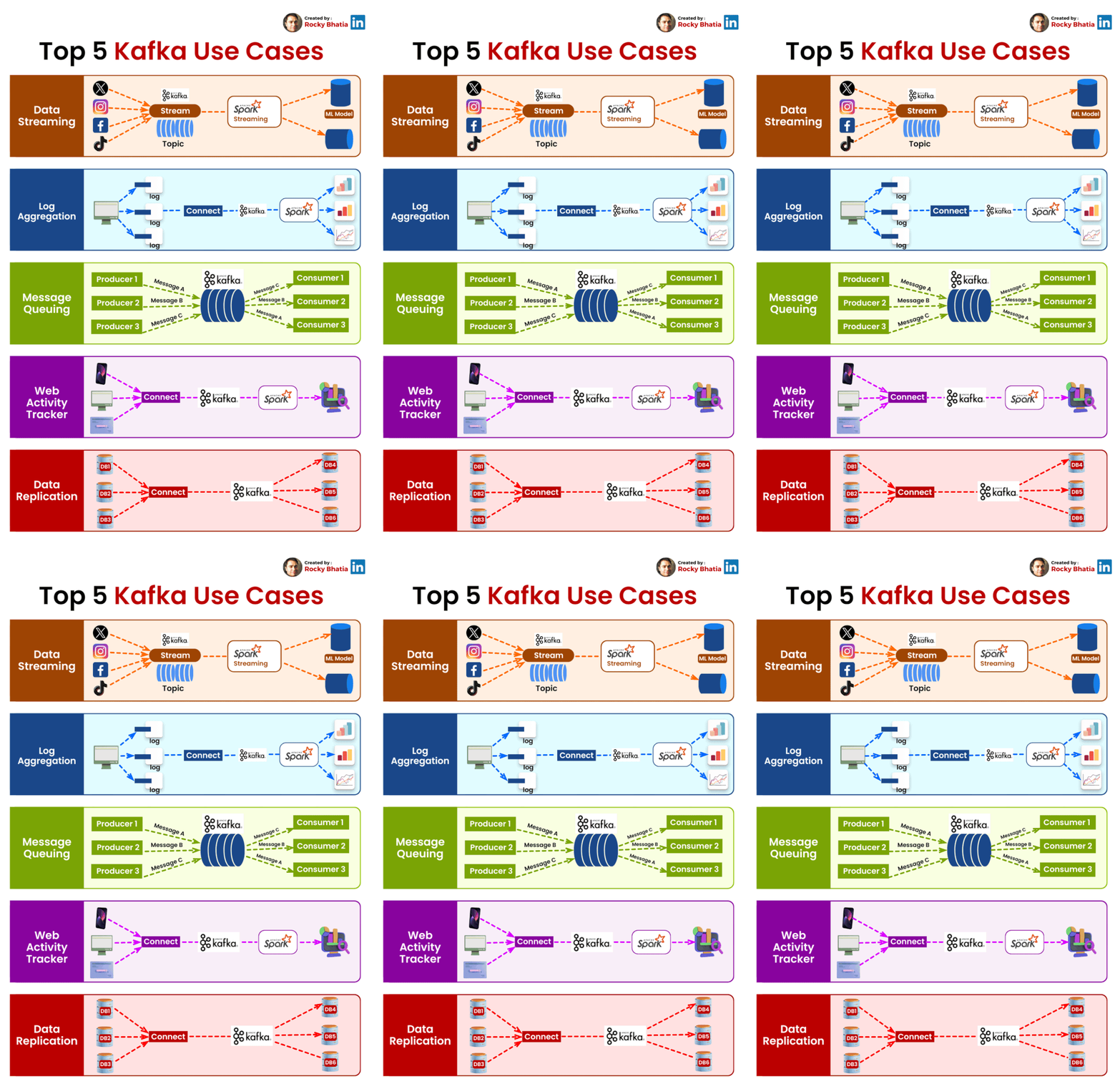
Top 5 Kafka Use Cases Transforming Industries:
Data Streaming 🌊: Monitor and act on real-time data across your organization.
Log Aggregation 📚: Manage large volumes of log data efficiently.
Message Queue 📨: Scale microservices communications with fault tolerance.
Web Activity Tracker 🕵️♂️: Customize user experiences with real-time insights.
Data Replication 🔁: Sync data seamlessly across systems.
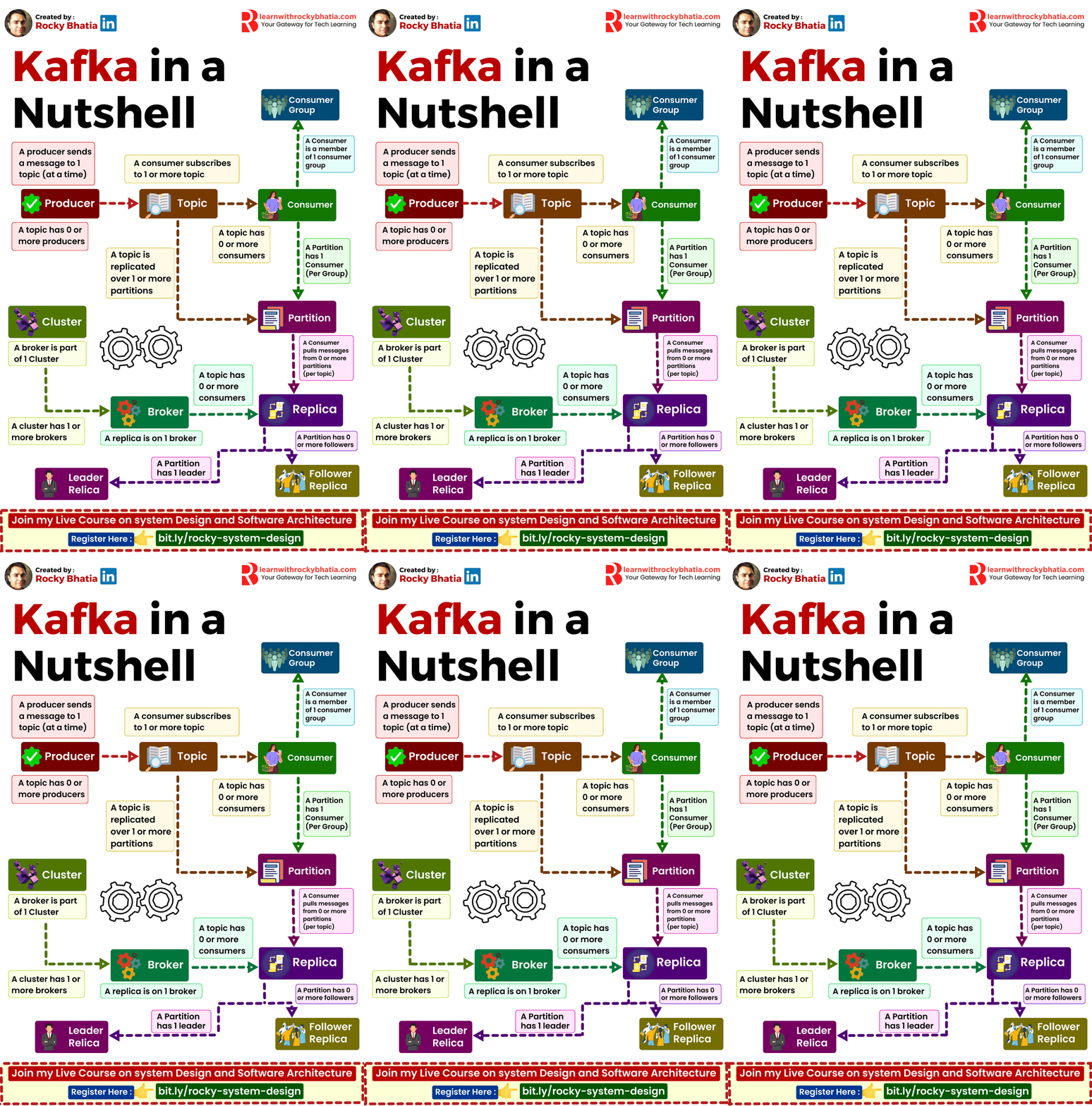
Kafka simplifies real-time data processing and ensures high availability with its robust architecture. Here’s a breakdown of its key components:
🔹 Producer: Initiates data streams, pushing records into Kafka topics for processing. 🔹 Consumer: Receives and processes data from Kafka topics, driving real-time analytics and applications. 🔹 Broker: The core unit of Kafka infrastructure, managing data storage, distribution, and replication. 🔹 Replica: Ensures fault tolerance and data durability by replicating partitions across multiple brokers. 🔹 Cluster: A collection of Kafka brokers working together to handle data streams and ensure high availability. 🔹 Topic: Logical channels for organizing and categorizing data streams in Kafka. 🔹 Partitions: Divides topics into smaller, scalable units, enabling parallel processing and load balancing. 🔹 Leader Replica: Handles read and write operations for a partition, ensuring consistency and reliability. 🔹 Follower Replica: Replicates data from leader replicas, providing redundancy and fault tolerance.
Kafka is designed to make data streaming seamless and efficient, empowering your real-time data analytics and applications.
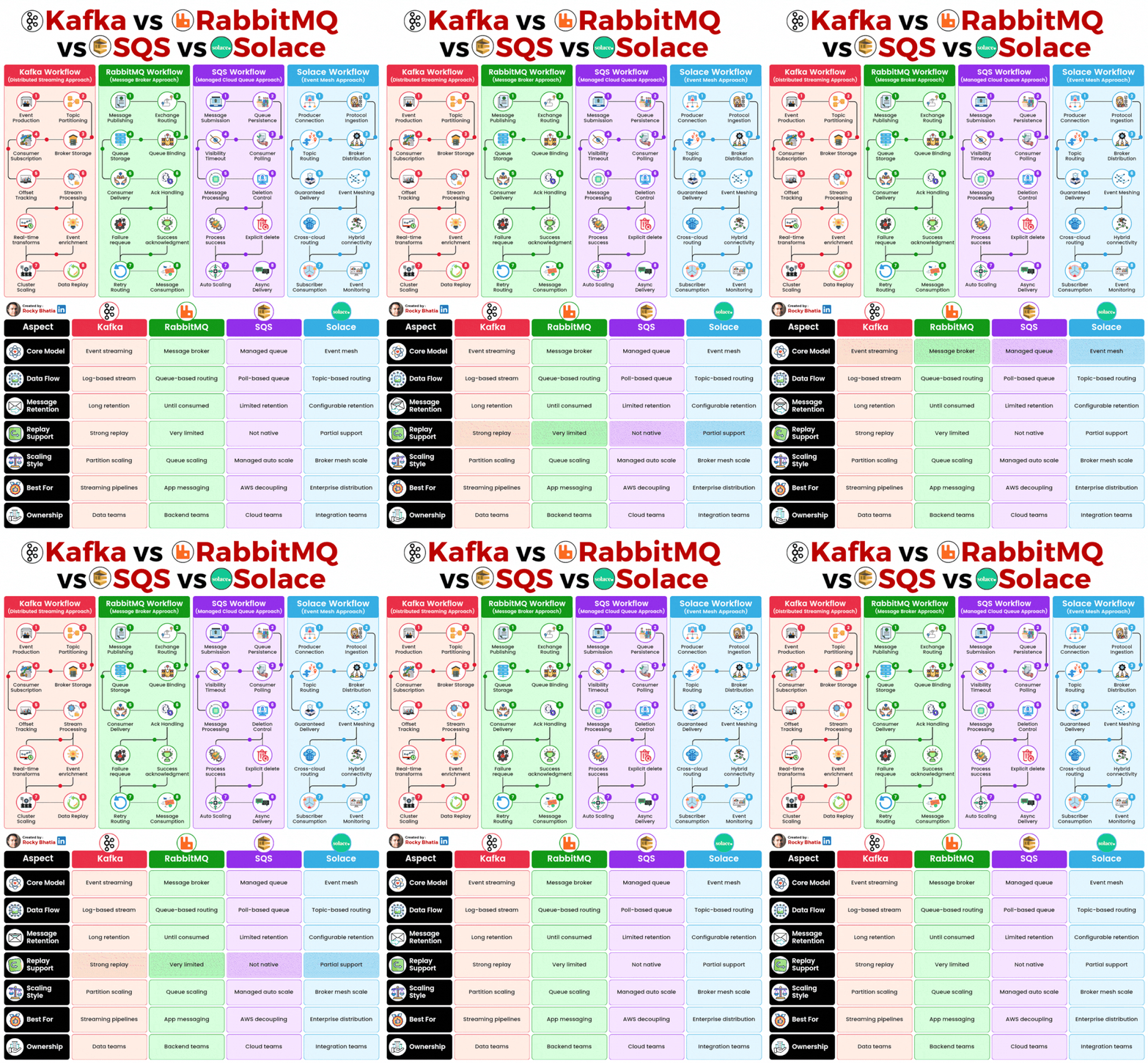
Kafka vs RabbitMQ vs SQS vs Solace
#messagequeues #kafka #rabbitmq #sqs #solace #messagebrokers
Choosing the wrong messaging system doesn't just slow you down. It breaks your architecture at scale.
Every senior engineer eventually faces this decision 👇
Kafka, RabbitMQ, SQS, and Solace all move messages. But they solve fundamentally different problems. And picking the wrong one for your use case is a silent, expensive mistake.
Here's how they actually differ:
Kafka – Built for distributed streaming at scale → Log-based stream, long retention, strong replay support → Best for: Streaming pipelines and data teams
RabbitMQ – The classic message broker → Queue-based routing, exchange routing, flexible bindings → Best for: App messaging and backend teams
SQS – Managed, serverless, AWS-native → Poll-based queue, managed auto-scaling, limited retention → Best for: AWS decoupling and cloud teams
Solace – Enterprise-grade event mesh → Topic-based routing, cross-cloud connectivity, hybrid support → Best for: Enterprise distribution and integration teams
The key differences at a glance: → Retention – Kafka and Solace win. SQS and RabbitMQ are limited. → Replay – Only Kafka offers strong native replay support → Scaling – Kafka scales partitions. SQS auto-scales. Solace meshes brokers. → Protocol – Solace supports the widest range of protocols natively
The decision isn't about which tool is best. It's about which tool fits your traffic pattern, team, and infrastructure.
Pick Kafka when you need stream processing and replay. Pick RabbitMQ when you need flexible routing between services. Pick SQS when you're deep in AWS and want zero ops overhead. Pick Solace when you're building enterprise-grade, cross-cloud event distribution.
Message Queue : Evolution

#MessageQueues #EvolutionOfMessageQueues #kafka #RabbitMQ #middleware
IBM MQ
IBM MQ was launched in 1993. It was originally called MQSeries and was renamed WebSphere MQ in 2002. It was renamed to IBM MQ in 2014. IBM MQ is a very successful product widely used in the financial sector. Its revenue still reached 1 billion dollars in 2020.
RabbitMQ
RabbitMQ architecture differs from IBM MQ and is more similar to Kafka concepts. The producer publishes a message to an exchange with a specified exchange type. It can be direct, topic, or fanout. The exchange then routes the message into the queues based on different message attributes and the exchange type. The consumers pick up the message accordingly.
Kafka
In early 2011, LinkedIn open sourced Kafka, which is a distributed event streaming platform. It was named after Franz Kafka. As the name suggested, Kafka is optimized for writing. It offers a high-throughput, low-latency platform for handling real-time data feeds. It provides a unified event log to enable event streaming and is widely used in internet companies.
Kafka defines producer, broker, topic, partition, and consumer. Its simplicity and fault tolerance allow it to replace previous products like AMQP-based message queues.
Pulsar
Pulsar, developed originally by Yahoo, is an all-in-one messaging and streaming platform. Compared with Kafka, Pulsar incorporates many useful features from other products and supports a wide range of capabilities. Also, Pulsar architecture is more cloud-native, providing better support for cluster scaling and partition migration, etc.
There are two layers in Pulsar architecture: the serving layer and the persistent layer. Pulsar natively supports tiered storage, where we can leverage cheaper object storage like AWS S3 to persist messages for a longer term.
