WhatsApp System Design
It feels instant—but behind the scenes, there's a beautifully orchestrated system at work.
Here’s a breakdown of the WhatsApp Message Flow:
• Your message is encrypted instantly and sent to WhatsApp’s servers.
• The server checks if the recipient is online or offline.
• If online → message is delivered and synced across devices.
• If offline → message is queued and delivered once they’re back online.
• Read receipts are sent back when the user reads your message.
• And yes — all this happens within seconds, securely and efficiently.
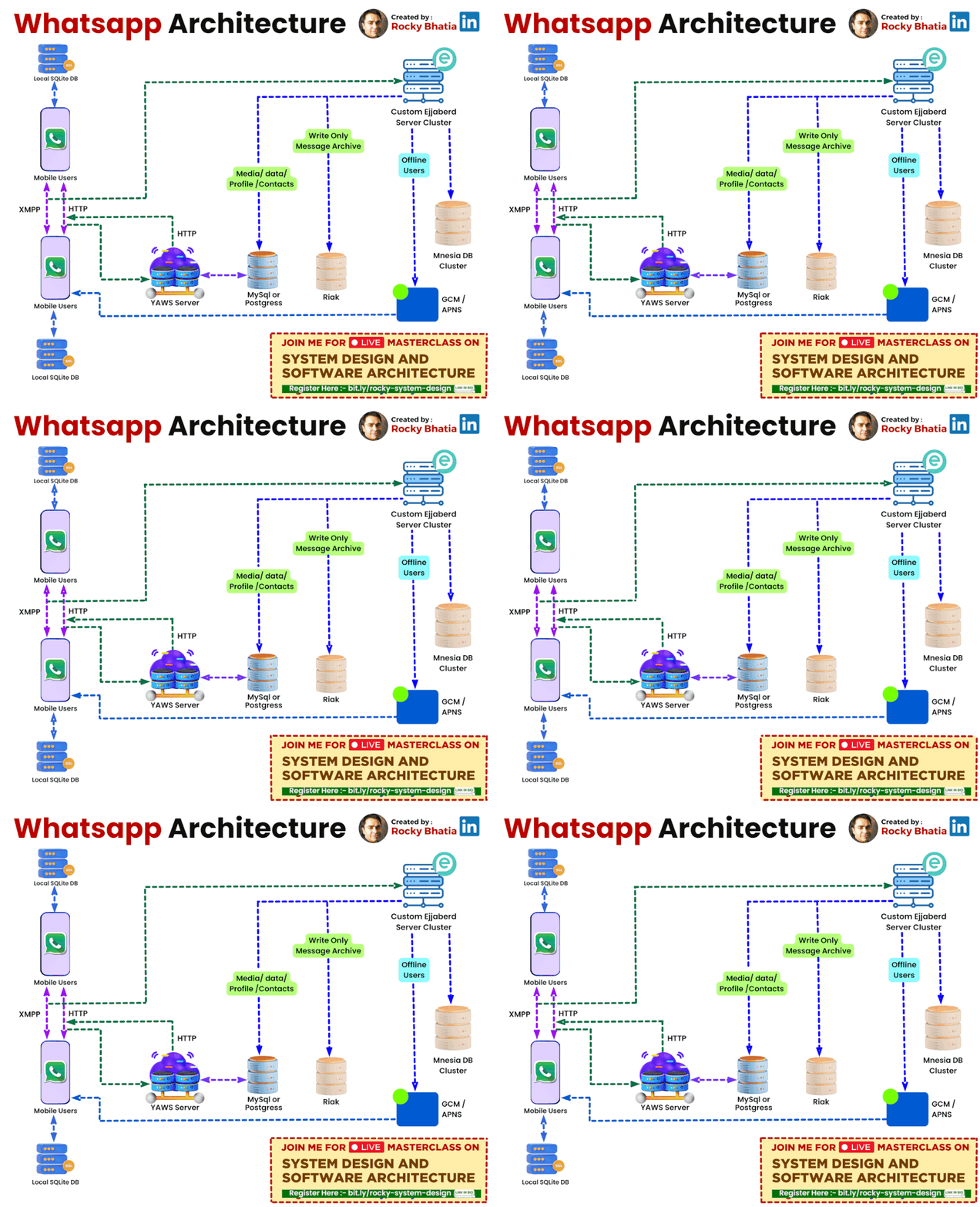
Let's Explore the fascinating world of WhatsApp's architecture, breaking down the key components that make it all work seamlessly.
𝐋𝐨𝐜𝐚𝐥 𝐒𝐐𝐋𝐢𝐭𝐞 𝐃𝐁: Where your messages find a temporary home on your device.
𝐌𝐨𝐛𝐢𝐥𝐞 𝐔𝐬𝐞𝐫𝐬: Millions of users, each with their unique experience.
𝐂𝐮𝐬𝐭𝐨𝐦 𝐄𝐣𝐣𝐚𝐛𝐞𝐫𝐝 𝐒𝐞𝐫𝐯𝐞𝐫 𝐂𝐥𝐮𝐬𝐭𝐞𝐫: The powerhouse handling real-time communication.
𝐘𝐀𝐖𝐒 𝐒𝐞𝐫𝐯𝐞𝐫: Ensuring smooth interactions between users and servers.
𝐌𝐧𝐞𝐬𝐢𝐚 𝐃𝐁 𝐂𝐥𝐮𝐬𝐭𝐞𝐫, 𝐌𝐲𝐒𝐐𝐋, or 𝐏𝐨𝐬𝐭𝐠𝐫𝐞𝐬: Managing vast amounts of user data securely.
𝐑𝐢𝐚𝐤: The backbone for storage and quick retrieval of media and data.
𝐗𝐌𝐏𝐏 & 𝐇𝐓𝐓𝐏: Protocols enabling instant messaging and data transfer.
𝐆𝐂𝐌 / 𝐀𝐏𝐍𝐒: Pushing notifications to keep you updated, no matter the platform.
𝐖𝐫𝐢𝐭𝐞 𝐎𝐧𝐥𝐲, 𝐌𝐞𝐬𝐬𝐚𝐠𝐞 𝐀𝐫𝐜𝐡𝐢𝐯𝐞, 𝐎𝐟𝐟𝐥𝐢𝐧𝐞 𝐔𝐬𝐞𝐫𝐬: Features shaping your messaging experience.
𝐌𝐞𝐝𝐢𝐚, 𝐃𝐚𝐭𝐚, 𝐏𝐫𝐨𝐟𝐢𝐥𝐞, 𝐂𝐨𝐧𝐭𝐚𝐜𝐭𝐬: How your media and crucial information are managed.
𝐇𝐓𝐓𝐏: The bridge for web-based interactions with the WhatsApp platform.
#whatsapp #systemdesign #architecture #
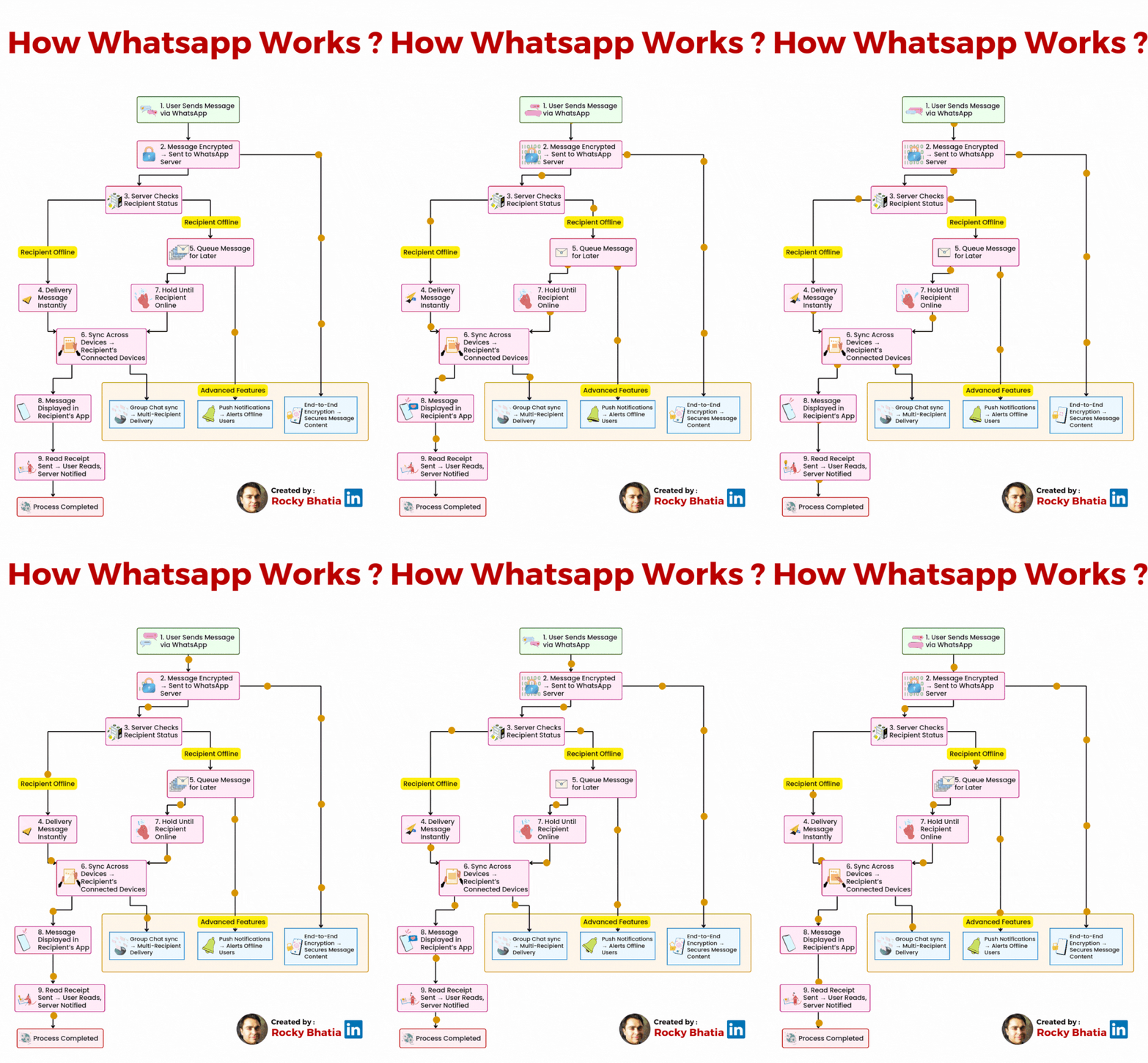
𝐖𝐡𝐚𝐭 𝐫𝐞𝐚𝐥𝐥𝐲 𝐡𝐚𝐩𝐩𝐞𝐧𝐬 𝐰𝐡𝐞𝐧 𝐲𝐨𝐮 𝐡𝐢𝐭 𝐒𝐞𝐧𝐝 𝐨𝐧 𝐖𝐡𝐚𝐭𝐬𝐀𝐩𝐩?
• It feels instant—but behind the scenes, there's a beautifully orchestrated system at work.
• Here’s a breakdown of the WhatsApp Message Flow:
• Your message is encrypted instantly and sent to WhatsApp’s servers.
• The server checks if the recipient is online or offline.
• If online → message is delivered and synced across devices.
• If offline → message is queued and delivered once they’re back online.
• Read receipts are sent back when the user reads your message.
• And yes — all this happens within seconds, securely and efficiently.
• I visualized the entire architecture in this diagram to simplify how it works. Whether you're into system design, distributed systems, or just curious about real-time messaging, this is a great example to learn from.
• *There is a typo in step 4 it should be online