Data Security: encoding, encryption, hashing
#datasecurity #cybersecurity #security #encoding #encryption #hashing
Have you ever found yourself scratching your head trying to figure out the differences between encoding, encryption, and hashing? Well, you're not alone. Let me break it down for you, minus the heavy tech lingo.
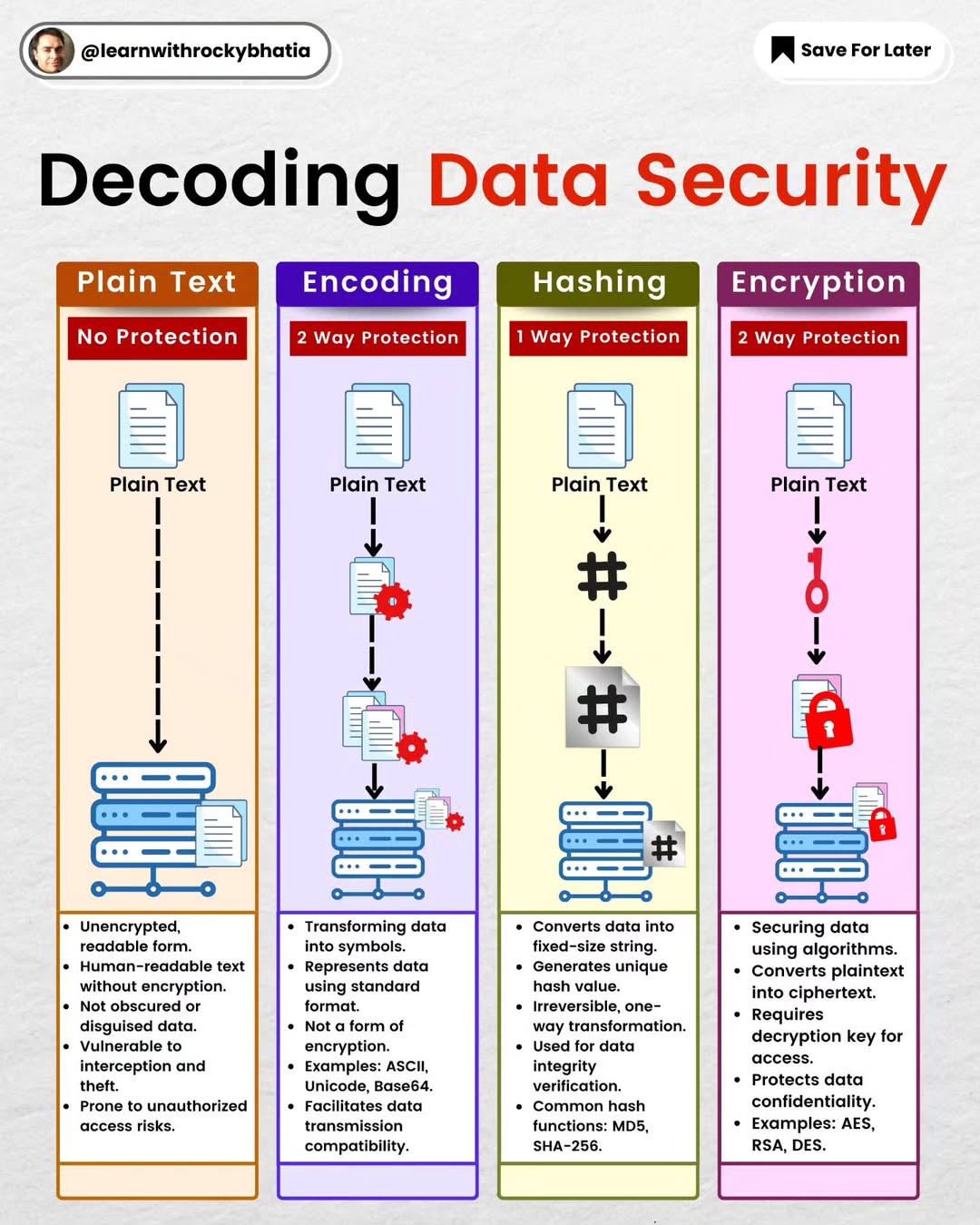
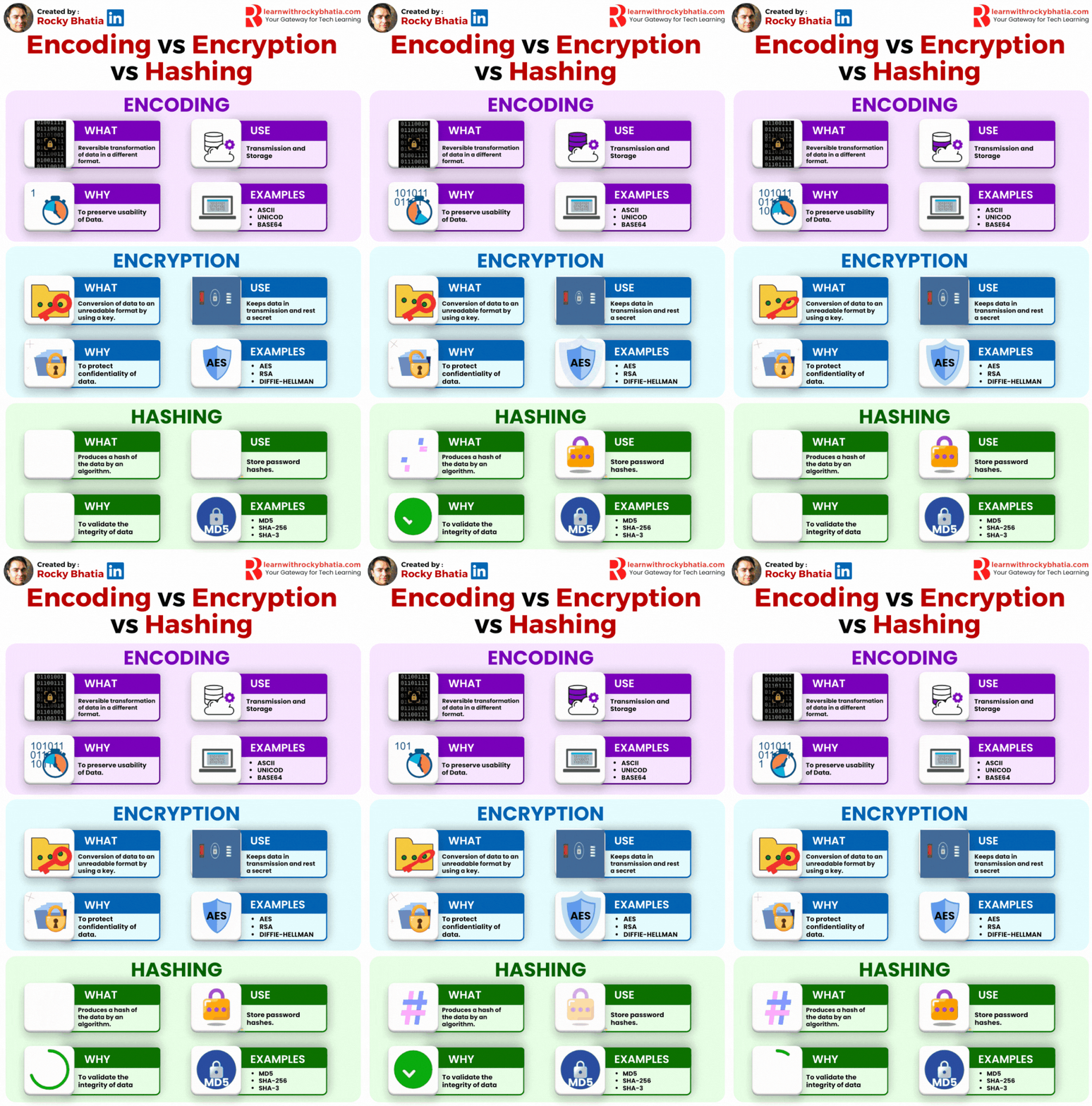
Encoding: Your Data's Passport
Think of encoding like giving your data a passport to travel internationally. It's all about converting data into a format that can be easily shared across different systems without confusion. Whether it's Base64, ASCII, or Unicode, encoding ensures that your message arrives intact, no matter where it's headed. Remember, encoding isn't about keeping secrets; it's about making sure your data can be understood anywhere and by anyone it's meant for.
Encryption: The Secret Agent
Now, if encoding is your data's passport, encryption is its secret agent disguise. When you encrypt data, you're scrambling it into a code that only someone with the right key can crack. It's the ultimate protection for your sensitive information, ensuring that only the intended recipient can see your message in its true form. Whether you're sending credit card info, private messages, or sensitive documents, encryption keeps your secrets safe from prying eyes.
Hashing: The One-Way Mirror
Hashing is a bit like a one-way mirror. It transforms your data into a fixed-size string or a “fingerprint,” but here's the kicker: you can't reverse the process. It's fantastic for checking if data has been tampered with or keeping passwords secure. If the data changes even a little bit, the hash will be completely different. It's a one-way trip – once your data is hashed, there's no going back.
Why This Matters to You Grasping these concepts is key in our digital age, especially if you're dabbling in digital communications, cybersecurity, or just want to keep your online presence safe. Each of these processes has its role, whether it's ensuring your data can travel safely, keeping your information private, or verifying that what you're seeing hasn't been messed with.