christova  

Senior

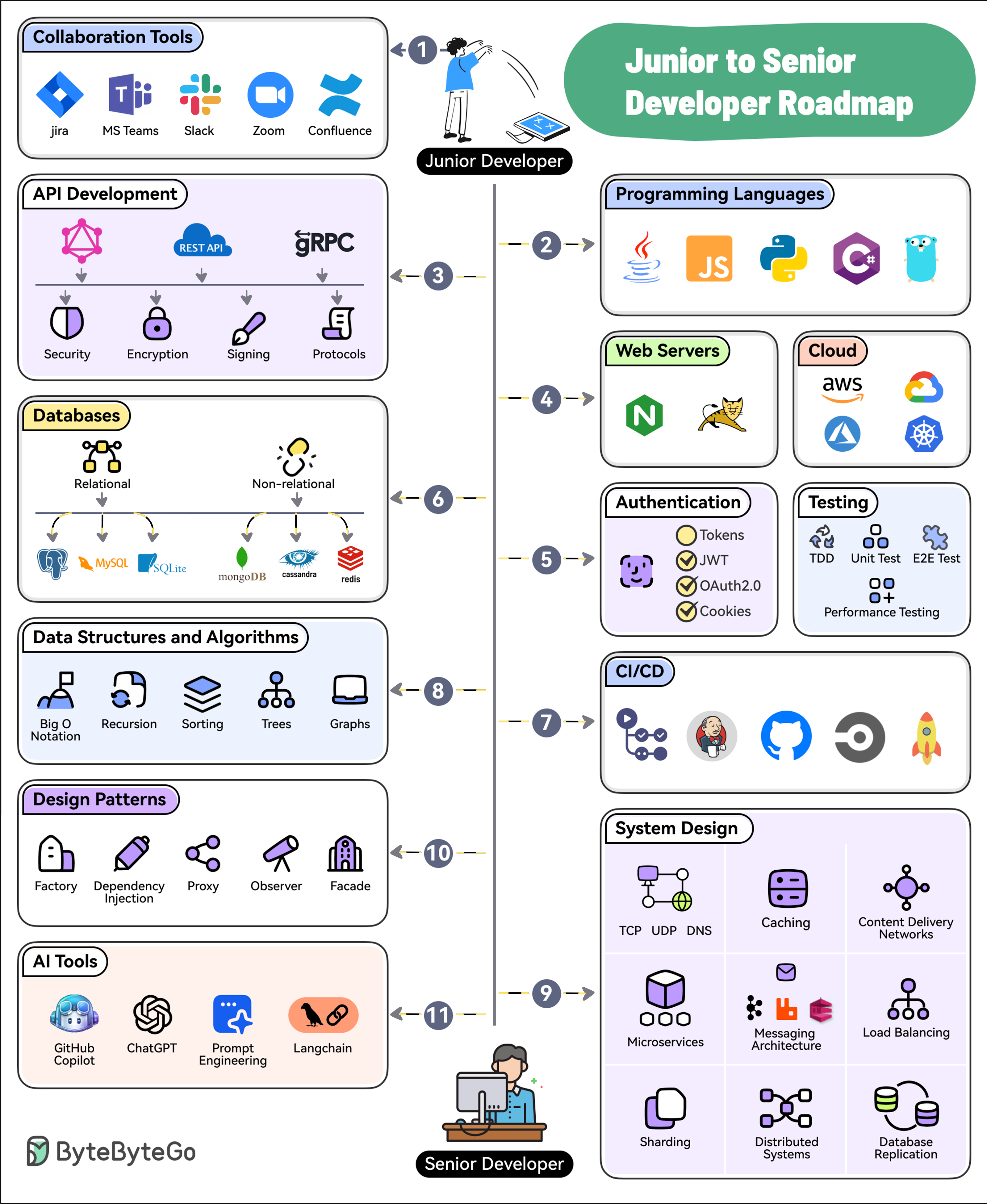
1. Collaboration Tools

Software development is a social activity. Learn to use collaboration tools like Jira, Confluence, Slack, MS Teams, Zoom, etc.

2. Programming Languages

Pick and master one or two programming languages. Choose from options like Java, Python, JavaScript, C#, Go, etc.

3. API Development

Learn the ins and outs of API Development approaches such as REST, GraphQL, and gRPC.

4. Web Servers and Hosting

Know about web servers as well as cloud platforms like AWS, Azure, GCP, and Kubernetes

5. Authentication and Testing

Learn how to secure your applications with authentication techniques such as JWTs, OAuth2, etc. Also, master testing techniques like TDD, E2E Testing, and Performance Testing

6. Databases

Learn to work with relational (Postgres, MySQL, and SQLite) and non-relational databases (MongoDB, Cassandra, and Redis).

7. CI/CD

Pick tools like GitHub Actions, Jenkins, or CircleCI to learn about continuous integration and continuous delivery.

8. Data Structures and Algorithms

Master the basics of DSA with topics like Big O Notation, Sorting, Trees, and Graphs.

9. System Design

Learn System Design concepts such as Networking, Caching, CDNs, Microservices, Messaging, Load Balancing, Replication, Distributed Systems, etc.

10. Design patterns

Master the application of design patterns such as dependency injection, factory, proxy, observers, and facade.

11. AI Tools

To future-proof your career, learn to leverage AI tools like GitHub Copilot, ChatGPT, Langchain, and Prompt Engineering.

#Roadmap #Junior #Senior

40 Tips From A Senior to a Junior developer

1. Master the Basics: Ensure you have a strong grasp of fundamental programming concepts. 2. Write Readable Code: Prioritize readability over cleverness. 3. Use Version Control: Learn Git and make frequent commits with meaningful messages. 4. Understand Your Tools: Get familiar with your IDE, debugger, and terminal. 5. Comment Wisely: Use comments to explain why, not what. 6. Practice Problem-Solving: Regularly work on coding challenges to improve your skills. 7. Learn Design Patterns: Study common design patterns and their use cases. 8. Ask Questions: Don’t hesitate to seek help when stuck. 9. Read Documentation: Thoroughly read the documentation for libraries and frameworks you use. 10. Write Tests: Develop a habit of writing unit and integration tests. 11. Refactor Regularly: Continuously improve your codebase. 12. Learn Debugging: Master the art of debugging to solve issues efficiently. 13. Understand Algorithms: Study common algorithms and their complexities. 14. Keep Learning: Stay updated with new technologies and industry trends. 15. Build Projects: Work on side projects to apply what you learn. 16. Use Code Reviews: Participate in code reviews to learn from others and improve your code. 17. Learn SQL: Know how to work with databases and write efficient queries. 18. Learn about the business domain you’re working in. 19. Build relationships with other developers. 20. Stay Organized: Use task management tools to keep track of your work. 21. Optimize Code: Write efficient code but avoid premature optimization. 22. Understand basic security practices. 23. Maintain good documentation for your projects. 24. Follow Best Practices: Adhere to industry best practices and coding standards. 25. Work on Soft Skills: Improve communication and teamwork skills. 26. Stay Humble: Be open to feedback and willing to admit mistakes. 27. Contribute to Open Source: Participate in open source projects to gain experience. 28. Practice Pair Programming: Collaborate with peers to solve problems together. 29. Understand the Full Stack: Gain knowledge of both front and back-end development. 30. Automate Repetitive Tasks: Use scripts and tools to automate repetitive tasks. 31. Monitor Performance: Use tools to monitor and improve application performance. 32. Keep Code Simple: Aim for simplicity in your code. 33. Learn from Mistakes: Analyze and learn from your errors. 34. Set Goals: Define and work towards personal and professional goals. 35. Be Patient: Development takes time; be patient with your learning process. 36. Read Books: Invest time in reading programming and technology books. 37. Join Communities: Engage in developer communities. 38. Stay Healthy: Maintain a healthy work-life balance. 39. Use Modern Practices: Embrace agile, DevOps, and continuous integration/deployment practices. 40. Mentor Others

#advice #senior #junior