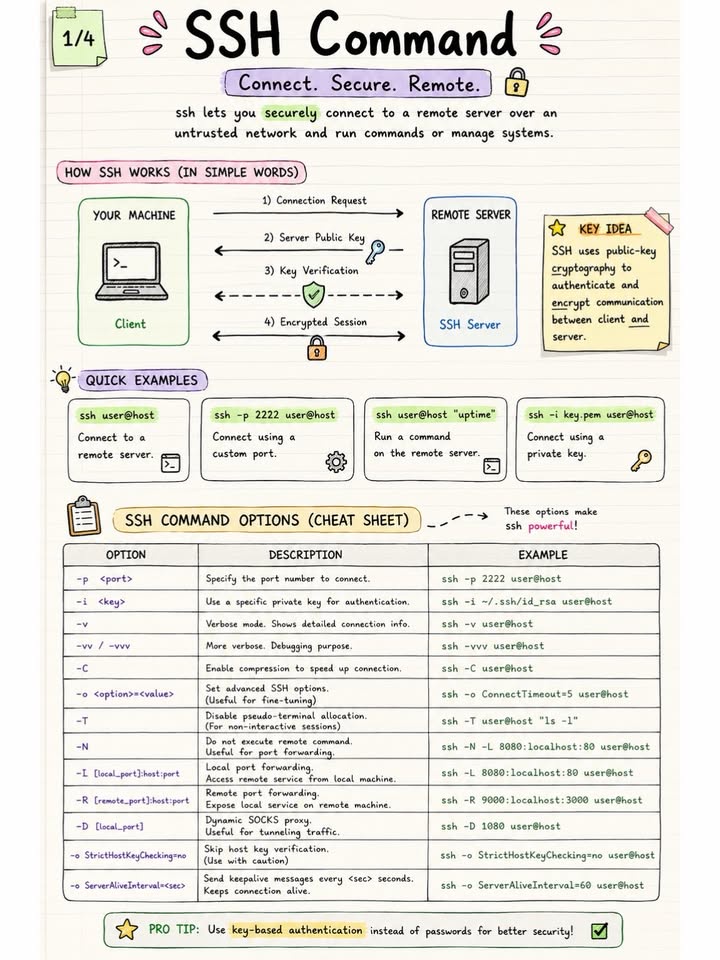
SSH is one of the most important tools in Linux & DevOps.
But most engineers only use:
ssh user@host
without understanding what actually happens underneath.
In this series:
🔐 How SSH creates a secure encrypted tunnel
🧠 How authentication & key exchange work
⚙️ Important SSH command options explained
🛡️ Security best practices for production servers
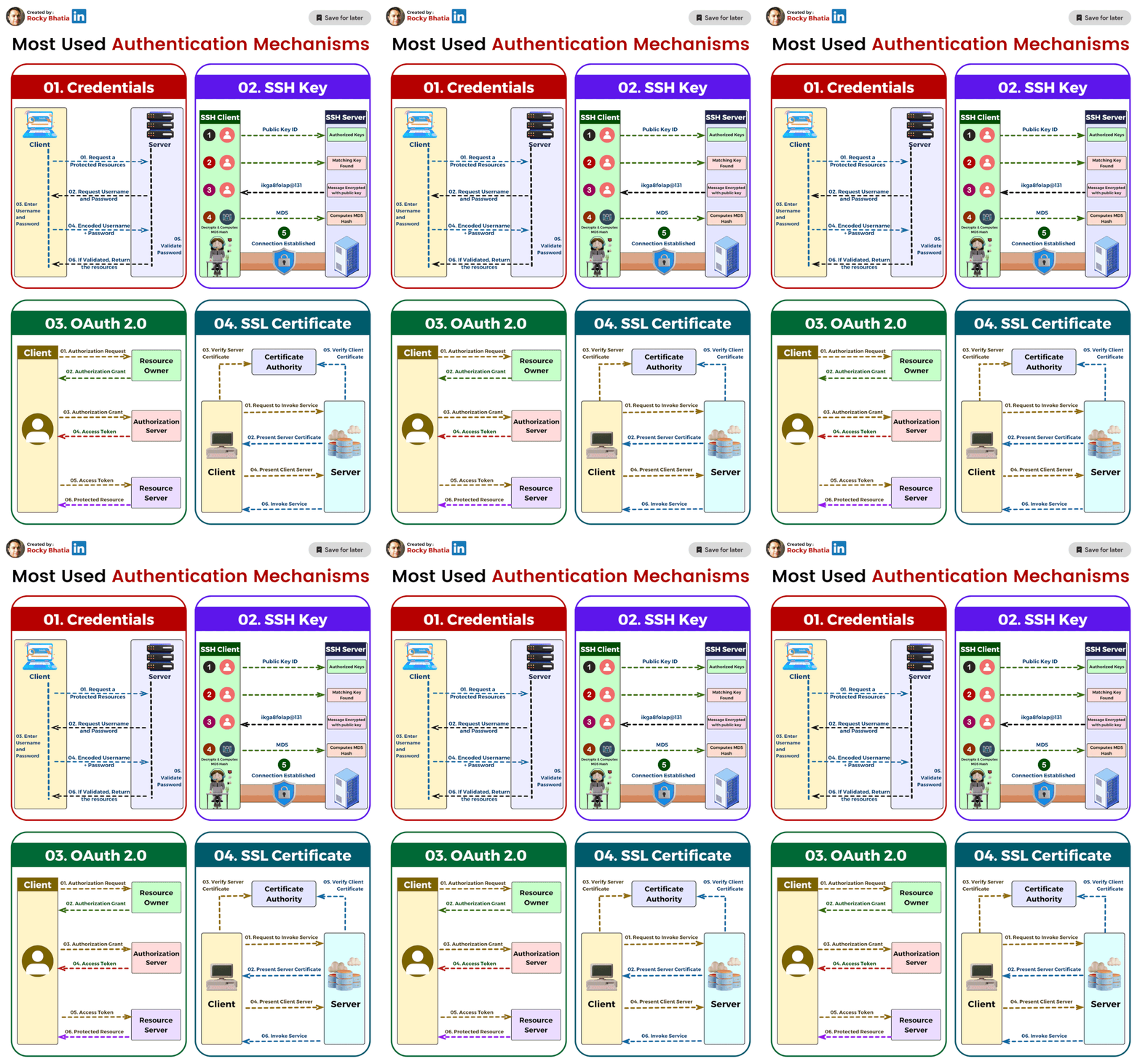
In today's tech landscape, authentication stands as the sentinel guarding our digital interactions. It's the shield against unauthorised access and data breaches, ensuring the sanctity of sensitive information and user trust.
🔐 Let's break down the top four authentication mechanisms:
1️⃣ Credentials: The classic username-password combo. Simple yet susceptible to attacks like brute force and phishing if not fortified properly.
2️⃣ SSH Keys: A robust method for remote access, leveraging cryptographic keys to grant entry securely.
3️⃣ OAuth 2.0: The backbone of secure web and mobile app interactions, allowing limited access without compromising login credentials.
4️⃣ SSL Certificates: Safeguarding data transmission through encryption, ensuring secure online transactions and communications.