REST vs GraphQL

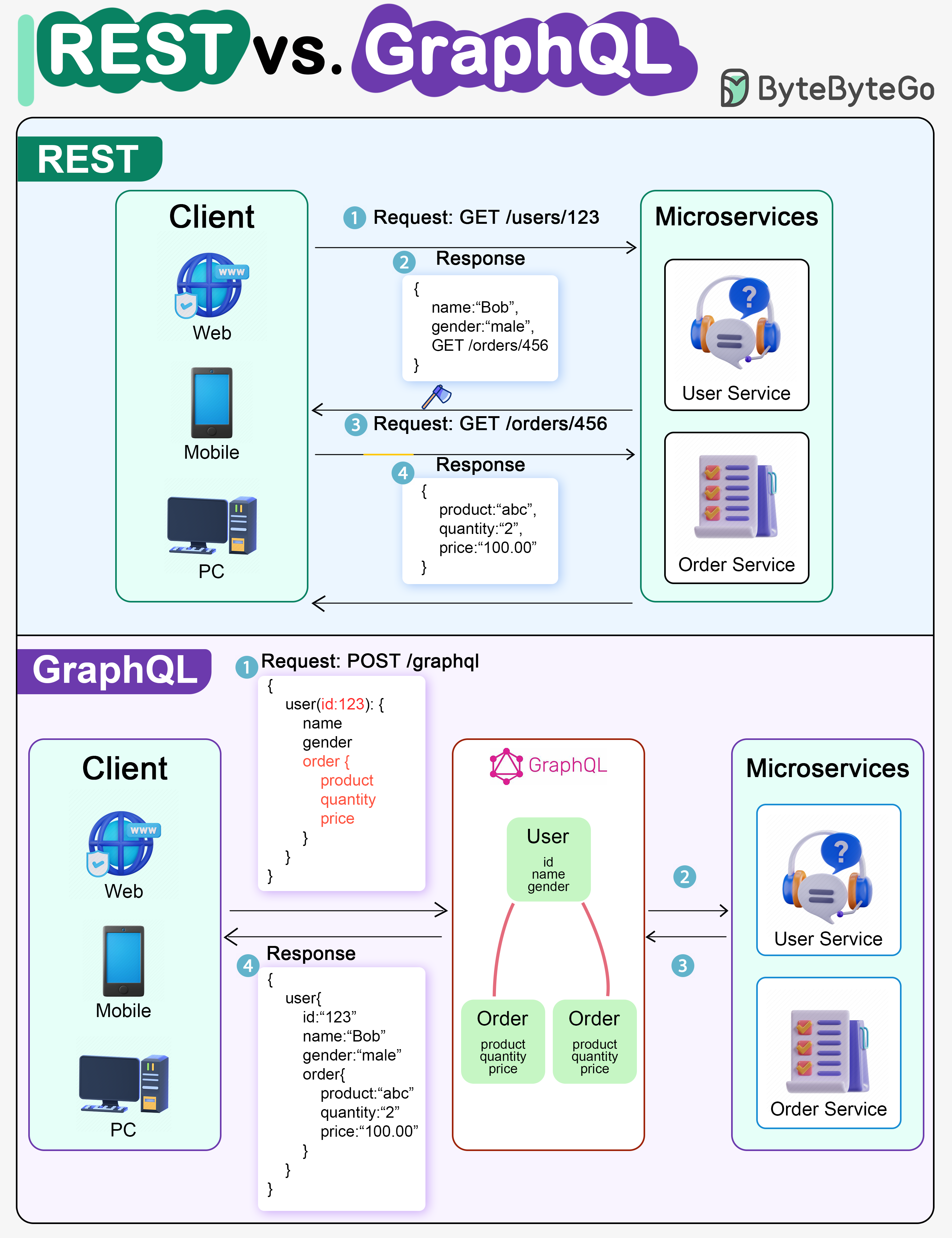
🔹 Data fetching REST APIs return fixed responses defined by the backend, which can lead to over-fetching or under-fetching of data. GraphQL allows clients to request exactly the data they need, nothing more and nothing less.
🔹 Endpoints REST uses multiple endpoints for different resources like users, posts, or orders. GraphQL uses a single endpoint to access all data through queries and mutations.
🔹 Performance REST can require multiple API calls to fetch related data. GraphQL can fetch related data in a single request, reducing network calls.
🔹 Flexibility REST APIs require backend changes when the response structure needs to change. GraphQL gives frontend teams more flexibility since they control the shape of the response.
🔹 Versioning REST often uses versioning like v1, v2, v3 when APIs change. GraphQL avoids versioning by evolving the schema without breaking existing queries.
🔹 Caching REST works very well with HTTP caching mechanisms. GraphQL caching is more complex and usually handled at the application level.
🔹 Use cases REST is best for simple CRUD operations and public APIs. GraphQL is ideal for complex UIs, mobile apps, and data-heavy applications.
👉 Rule to remember: Simple APIs with strong caching? Choose REST. Complex data needs with flexible queries? Choose GraphQL.