How API Gateway Works
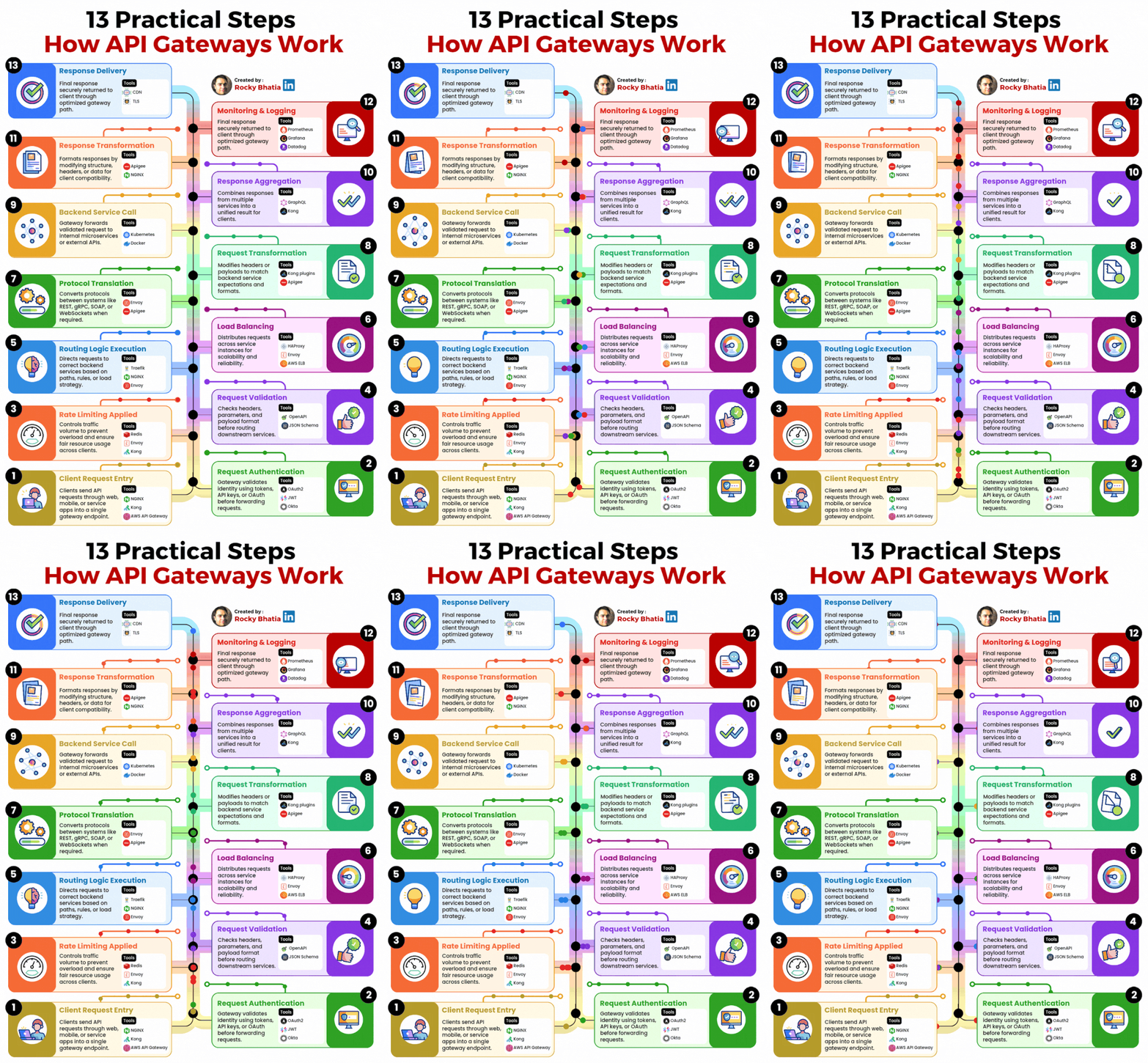
1. Client Request Entry
Web, mobile, or service clients send requests into a single gateway endpoint.
2. Request Authentication
Gateway validates identity via tokens, API keys, or OAuth before anything moves forward.
3. Rate Limiting
Controls traffic volume to prevent overload and ensure fair resource usage.
4. Request Validation
Checks headers, parameters, and payload format before routing downstream.
5. Routing Logic
Directs requests to the correct backend service based on paths, rules, or load strategy.
6. Load Balancing
Distributes traffic across service instances for scalability and reliability.
7. Protocol Translation
Converts between REST, gRPC, SOAP, or WebSockets when systems speak different languages.
8. Request Transformation
Modifies headers or payloads to match backend service expectations.
9. Backend Service Call
Gateway forwards the validated request to internal microservices or external APIs.
10. Response Aggregation
Combines responses from multiple services into a single unified result.
11. Response Transformation
Formats the response structure, headers, or data for client compatibility.
12. Monitoring & Logging
Every request tracked – latency, errors, usage patterns. The observability layer that keeps production sane.
13. Response Delivery
Final response securely returned to the client through the optimized gateway path.
Tools doing the heavy lifting: Kong, Envoy, NGINX, Apigee, AWS API Gateway, Traefik – each handling different layers of this flow.
The API Gateway isn't just a proxy.
It's the security, reliability, and observability layer your entire system depends on.