Data Structures & Algorithms
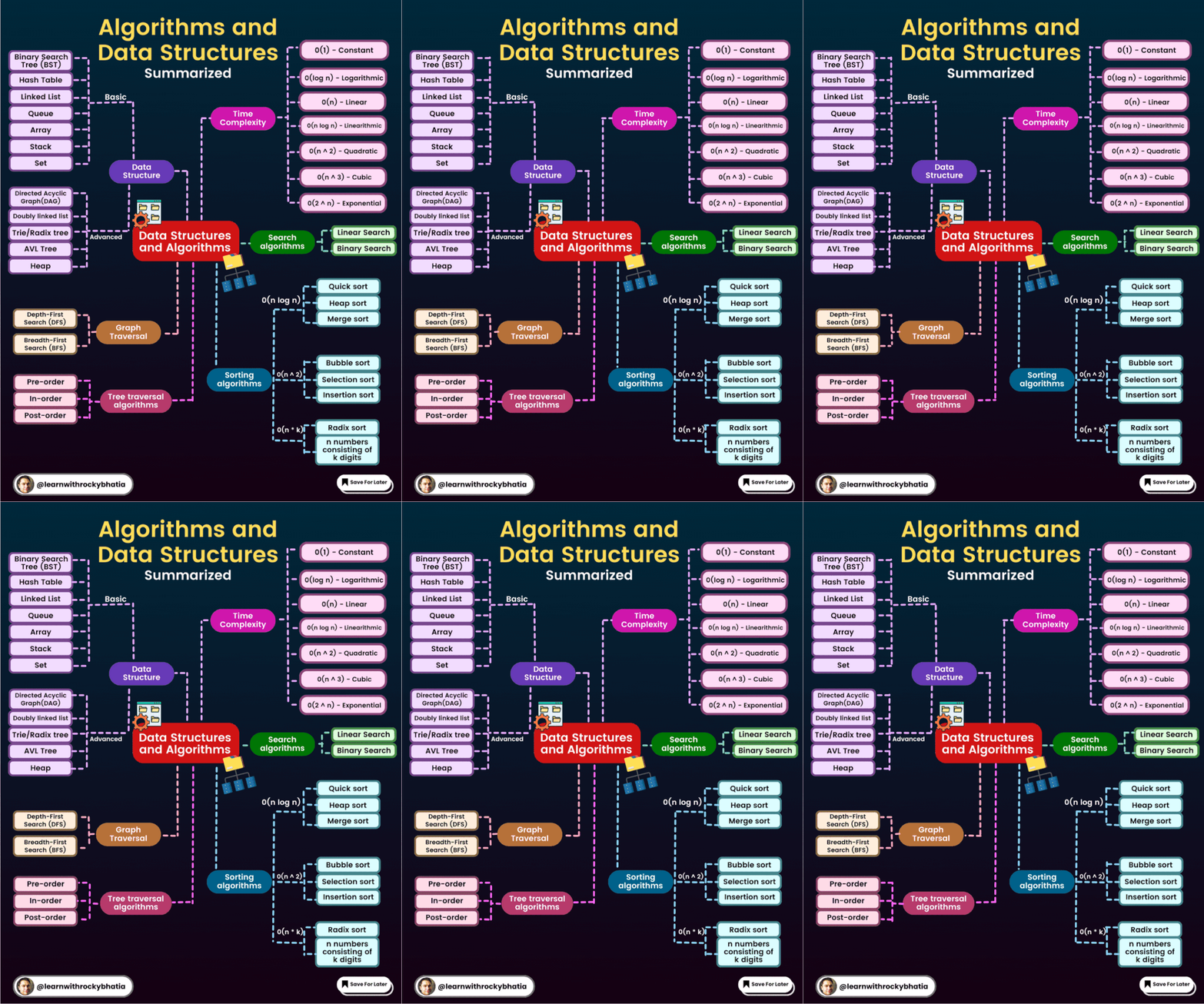
Data Structures and Algorithms
Primitive Data Structures
• Integers • Floating-point numbers • Characters • Boolean values
Non-Primitive Data Structures
• Arrays: Fixed-size sequence of elements, efficient for random access but inefficient for insertions/deletions. • Linked Lists: Dynamic structure of nodes linked by pointers, efficient for insertions/deletions at any position but slower random access. • Stacks: LIFO (Last-In-First-Out) order, used for function calls and expression evaluation. • Queues: FIFO (First-In-First-Out) order, used for scheduling and task management. • Trees: Hierarchical structures with a root node, used for representing hierarchical relationships (e.g., binary trees, n-ary trees). • Graphs: Collections of nodes (vertices) connected by edges, used for representing networks and relationships. • Hash Tables: Data structures that use hashing to store and retrieve data efficiently, often used for implementing dictionaries and databases.
Choosing the right data structure depends on factors such as:
• Data type and volume • Required operations (insertion, deletion, search, etc.) • Memory usage • Efficiency considerations