Design Patterns
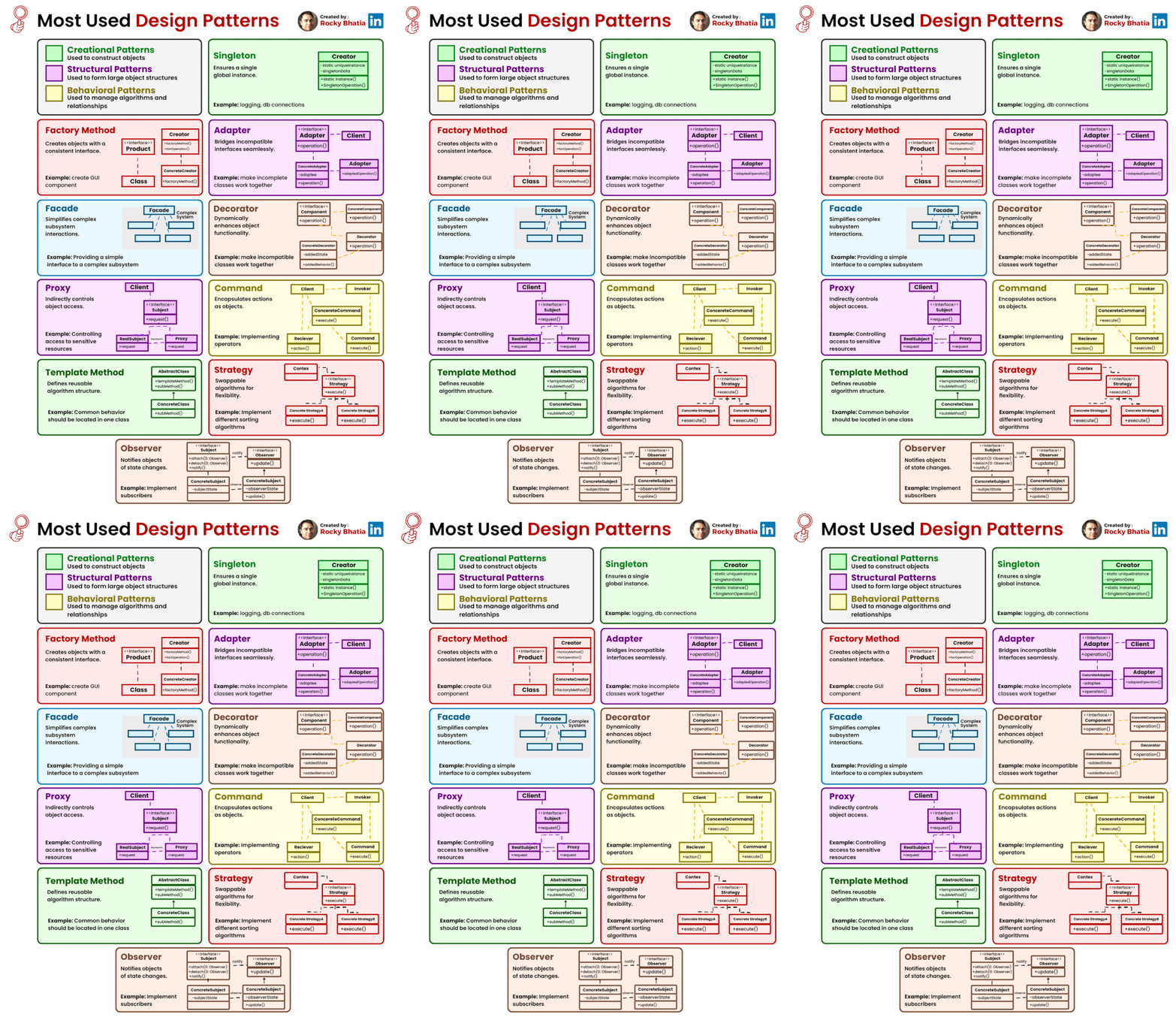 Categories of Design Patterns:
1. Creational: Focuses on flexible object creation, making the system independent of specific instantiation methods.
2. Behavioral: Defines interaction and communication patterns between objects.
3. Structural: Manages class and object composition, allowing for efficient and flexible system structures.
Top 10 Design Patterns with Real-Life Examples:
1. Singleton: Ensures a single instance (e.g., printer spooler).
2. Factory: Creates objects without specifying exact classes (e.g., car factory).
3. Adapter: Adapts interfaces for compatibility (e.g., universal power adapter).
4. Facade: Simplifies complex systems (e.g., remote control for home entertainment).
5. Decorator: Adds behavior dynamically (e.g., pizza toppings).
6. Proxy: Controls access as an intermediary (e.g., proxy server).
7. Command: Queues requests as objects (e.g., remote control with device buttons).
8. Template Method: Defines algorithm skeletons for customization (e.g., baking recipes).
9. Strategy: Provides interchangeable algorithms (e.g., online payment methods).
10. Observer: Updates dependencies automatically (e.g., weather app subscriptions).